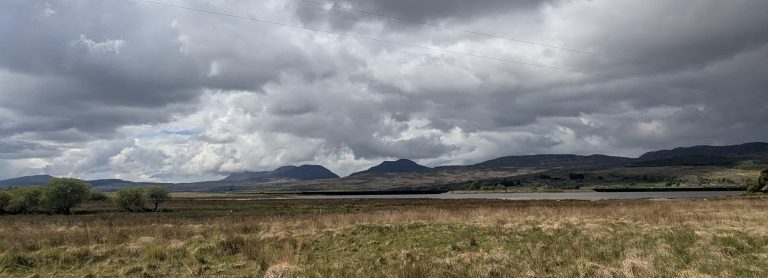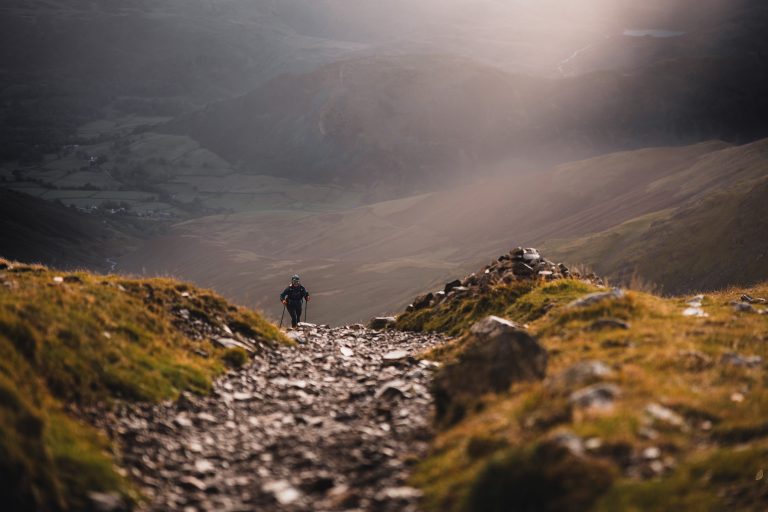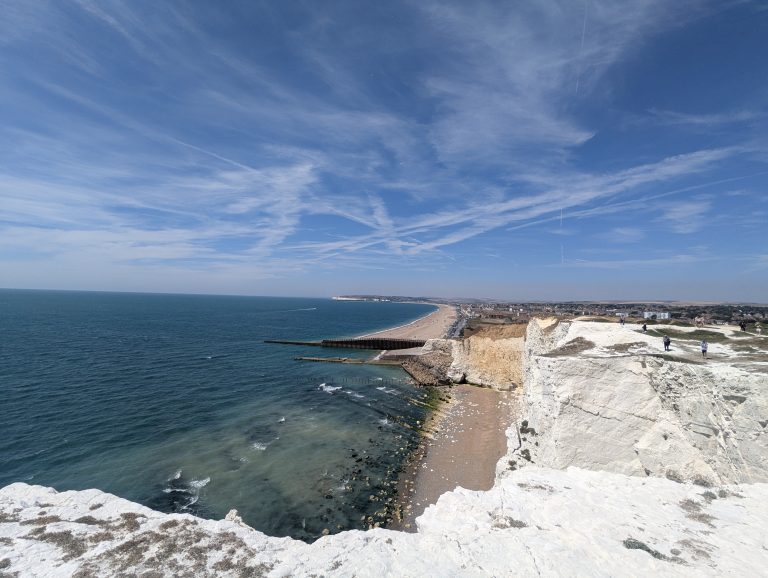

It has taken me more than two years of racing up north to figure out how to survive the fells as a flatland Southerner. I put all that trial, error, and chafing from the last couple of years into my recent post: How to Survive Your First Ultra in the Lakes: 10 Tips from a Humbled Southerner
But every single lesson I learned over those two years was about to be put to the ultimate test. Lakes in a Day has been a bucket list item for me for a long time – and after experiencing it, I can confidently say it should be on yours, too.
Let’s get into the mud!
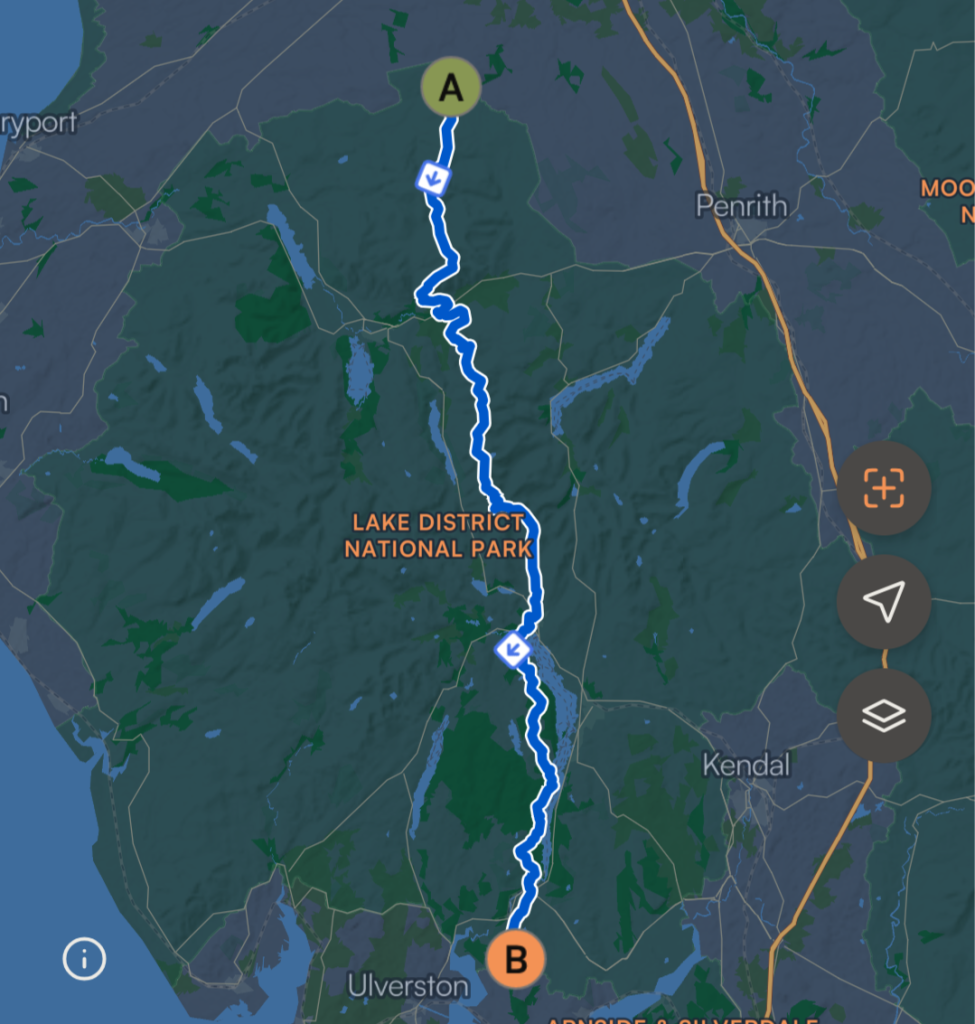
Lakes in a Day by Durty Events is an end-to-end traverse of the Lake District, drawing a rugged line from Caldbeck in the far north to Cartmel in the south. Around 55 miles, pretty much two marathons back-to-back, with a staggering 4000 meters of climbing.”That’s almost half the ascent of Everest alone!” All of which is across some of the most spectacular and unforgiving terrain in the country.
My summit list included 18 named high points (including 12 Wainwrights) before I even reached the long, leg-burning miles towards the finish.
Here is how the first half of the adventure unfolded.
Stats at a Glance
- Distance: ~55 miles (88 km) end-to-end traverse
- Elevation Gain: +4,000 meters (approx. 13,000 ft)
- High Points: 18 named summits (including 12 Wainwrights)
- Route: Caldbeck (North) to Cartmel (South)
- Finish Time: 18 hours 57 minutes
- Final Position: 191st overall / Women’s #31 (V40 #15)
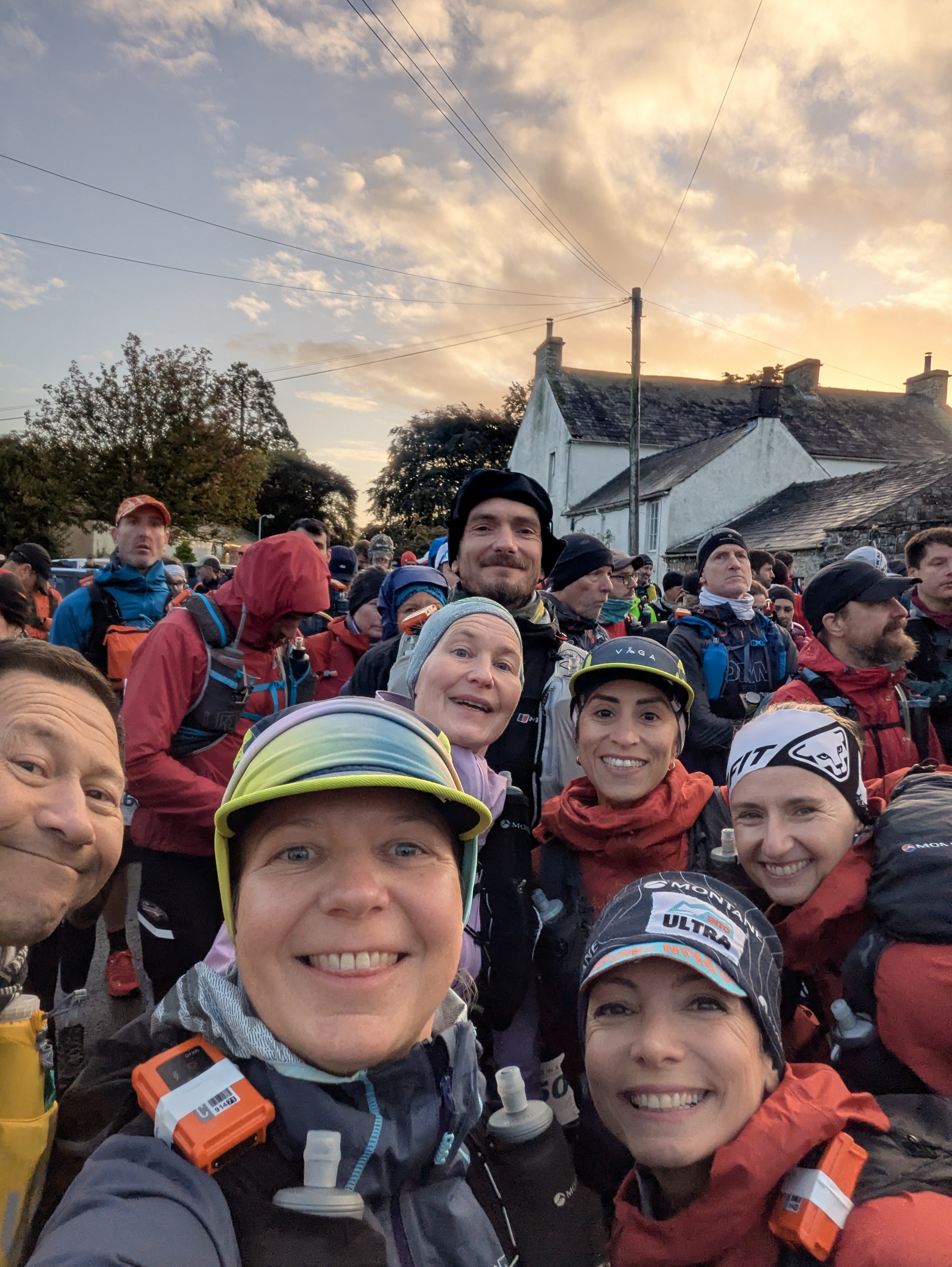
Into the Fells: Cold Feet and Gale Force Winds
📍 Caldebeck 🕓 8:03
I started the race carrying just 1 liter of liquid carbs – Precision Hydration to get me through the first section, which was just over 10 miles long but packed a serious punch: a river crossing, the ascent of Blencathra, and (supposedly) the infamous descent over Hallsfell Ridge.
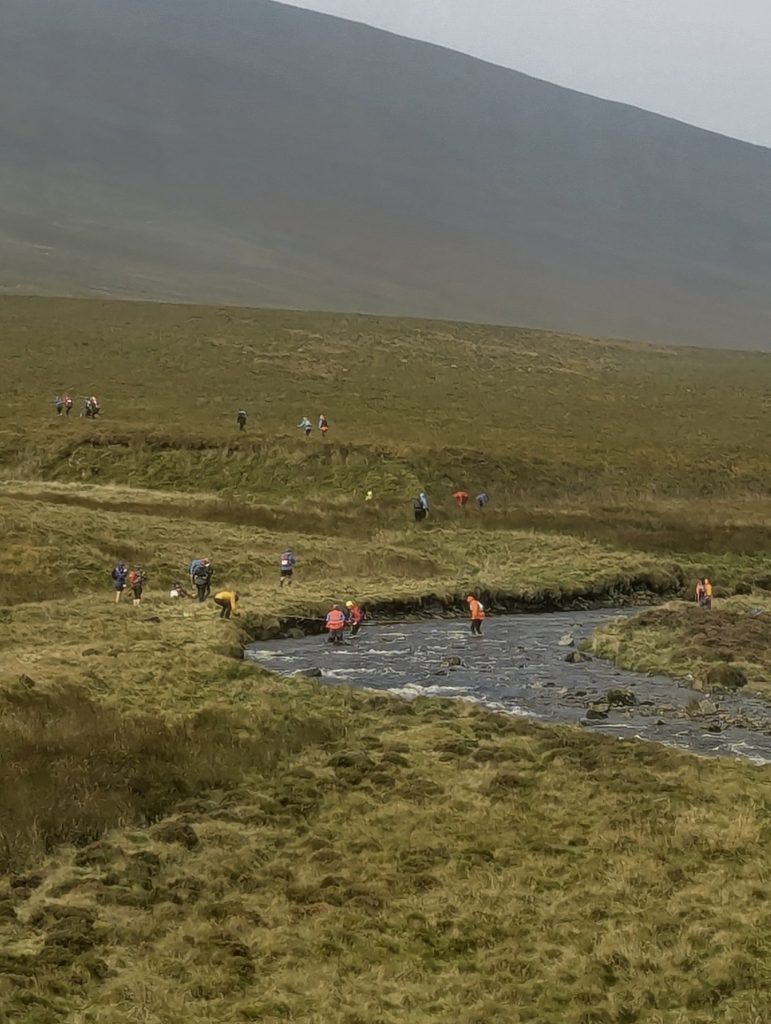
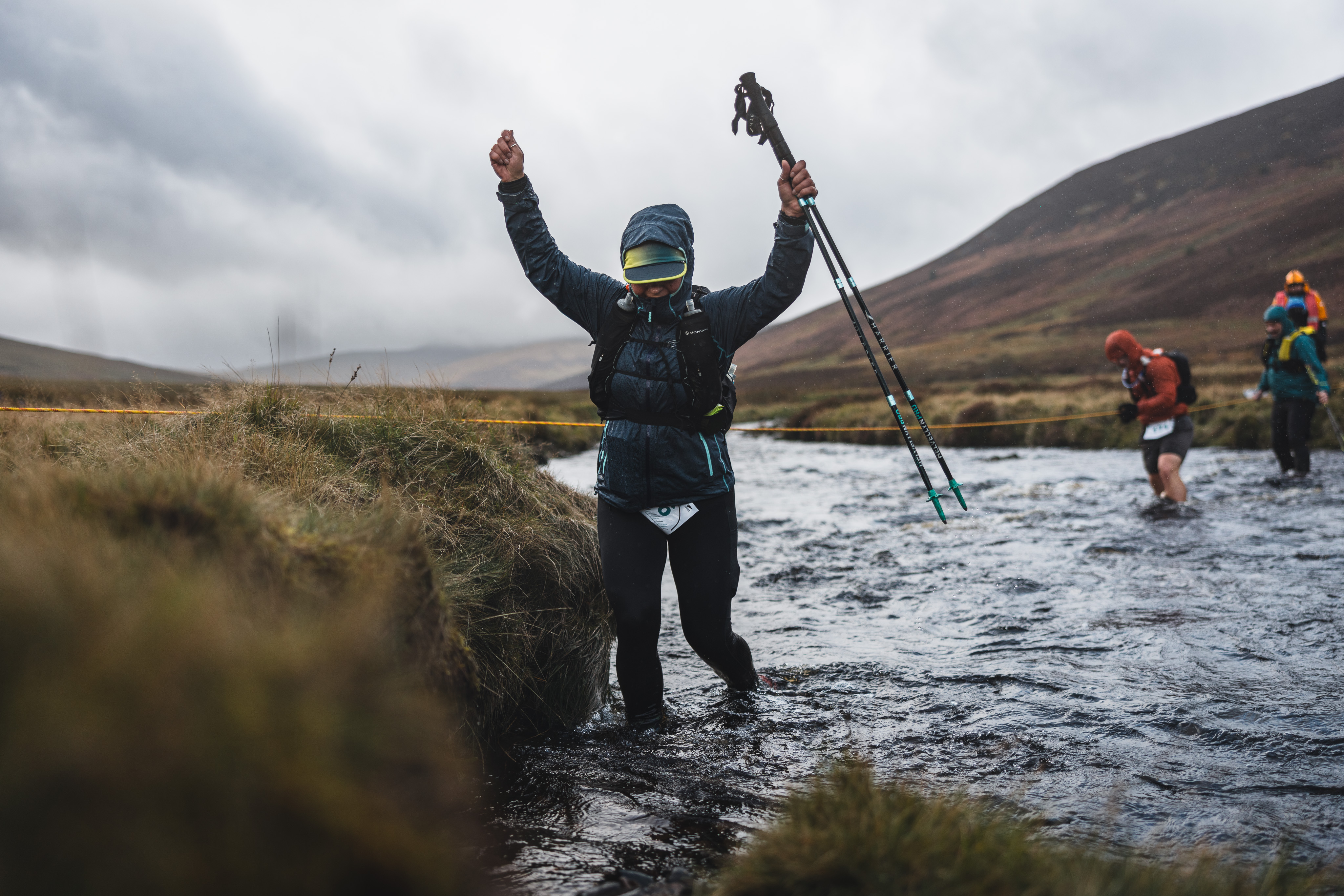
The tone was set early. We hit the river crossing, and it wasn’t a gentle splash. It was knee-deep, freezing water, supported by a rope and incredibly hardy volunteers. I plunged in, and as I dragged myself out on the other side, my feet were instantly frozen. A wave of panic hit me – am I really going to be able to do this if my feet are this cold for the entire race?
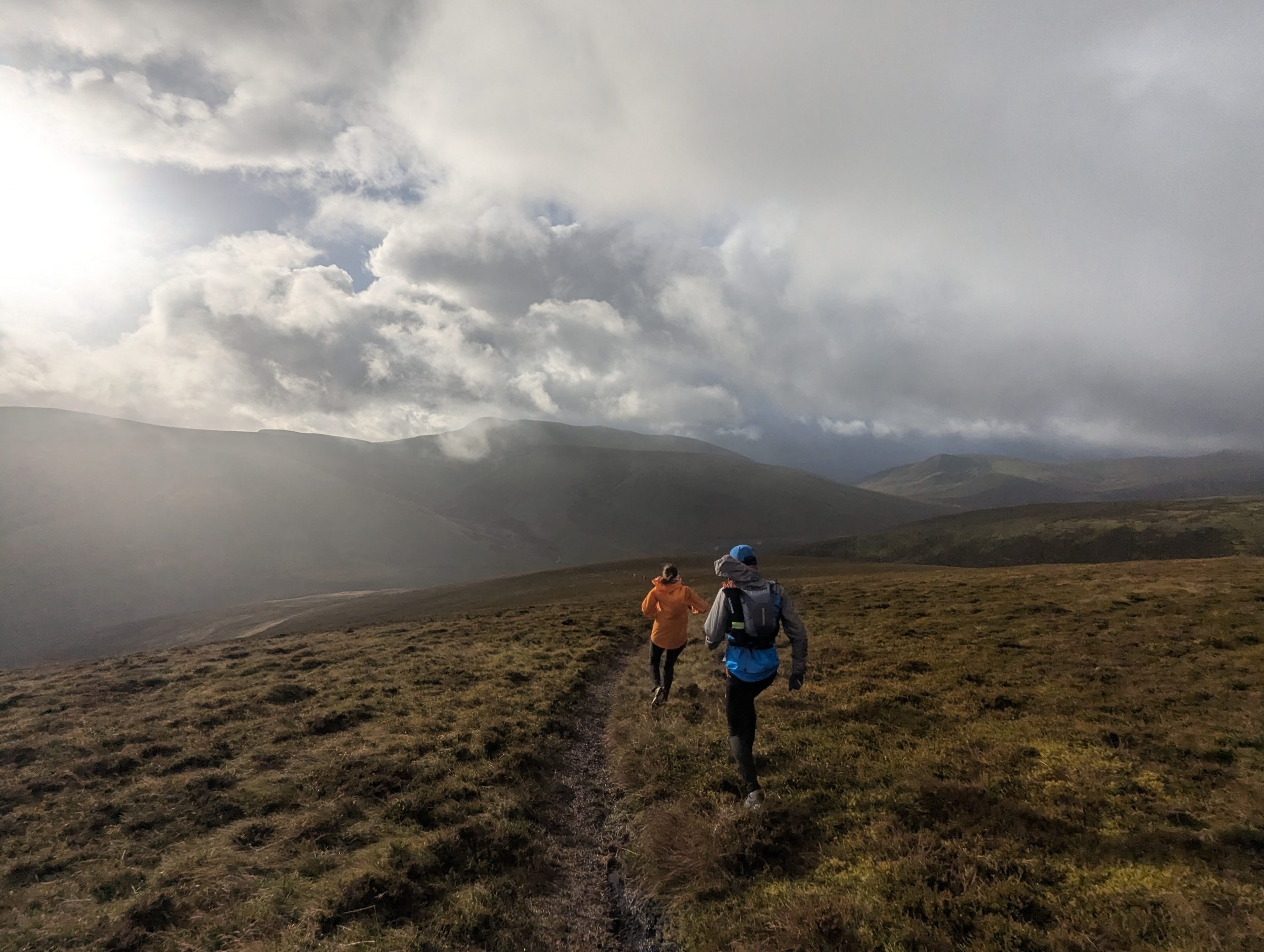
From the river, a relentlessly boggy ascent toward Blencathra began. My feet eventually warmed up through sheer effort, but as we climbed higher, the weather bared its teeth. By the time we summited Blencathra, the gale-force wind was absolute insanity. The race HQ made the entirely sensible call to direct us around via a car park. The notoriously technical Hallsfell Ridge descent was cancelled. Not today. When you’re high in the mountains, the conditions call the shots. You put your head down and keep moving.
Threlkeld to Helvellyn: Sideways Rain and Sticks Pass
📍 Threlkeld (#254)🕓 11:43 | ⏱️ 3:40 | 🏃 19.6 km | ⛰️ +1,100m
I rolled into the first feed station at Threlkeld feeling decent. I executed a quick pit stop: I topped up my hydration by grabbing two spare flasks with pre-mixed Precision Hydration solution from the boot of my vest, topped up front flasks, grabbed some fruit, drank flat Coke, hit the loo, and was back out. It was a massive morale boost to see Shirin from my LIAD gang there before heading back into the wild.
We took some nice, wiggly paths to get us to the other side, right to the foot of the Helvellyn ridge. The course around Threlkeld was well signposted, routing us on an off-trail climb towards Clough Head, where I bumped into Shirin again.
As we climbed, the wind picked up with a vengeance, blowing us completely sideways. Shirin and I stuck together for a little while to battle the gusts, but eventually, she took off. I made the conscious decision to let her go and stick to my comfortable, easy pace. It was a long way ahead, and I needed to pace the terrain, not the distance.
The route skirts around three Wainwrights (Great Dodd, Watson’s Dodd and Stybarrow Dodd) – there was a lot of discussion in our Airbnb – to ascend or not to ascend – but in the end everyone was sensible and stuck to the route – too early in the race to dick around. Then the course reaches Sticks Pass. Up there, the exposure to the wind was so severe it was physically impossible to run. Powered through the pass until we finally started the main ascent up Helvellyn, ticking off a couple of Wainwrights – Raise and White Side. After navigating through the rocky field – not exactly boulders but rocks prominent enough to take you down the moment you lose focus- we hit the long, quad-burning descent toward Grisedale Tarn.
I reached the cut-off point at Grisedale House with nearly an hour to spare. I was still in the game. But looming ahead was the last mega climb of the first half: Fairfield.
Fairfield and the Race Against the Dark
📍 Grisedale House (#246) 🕓 16:44 | ⏱️ 8:41 | 🏃 40.5 km | ⛰️ +2,400 m
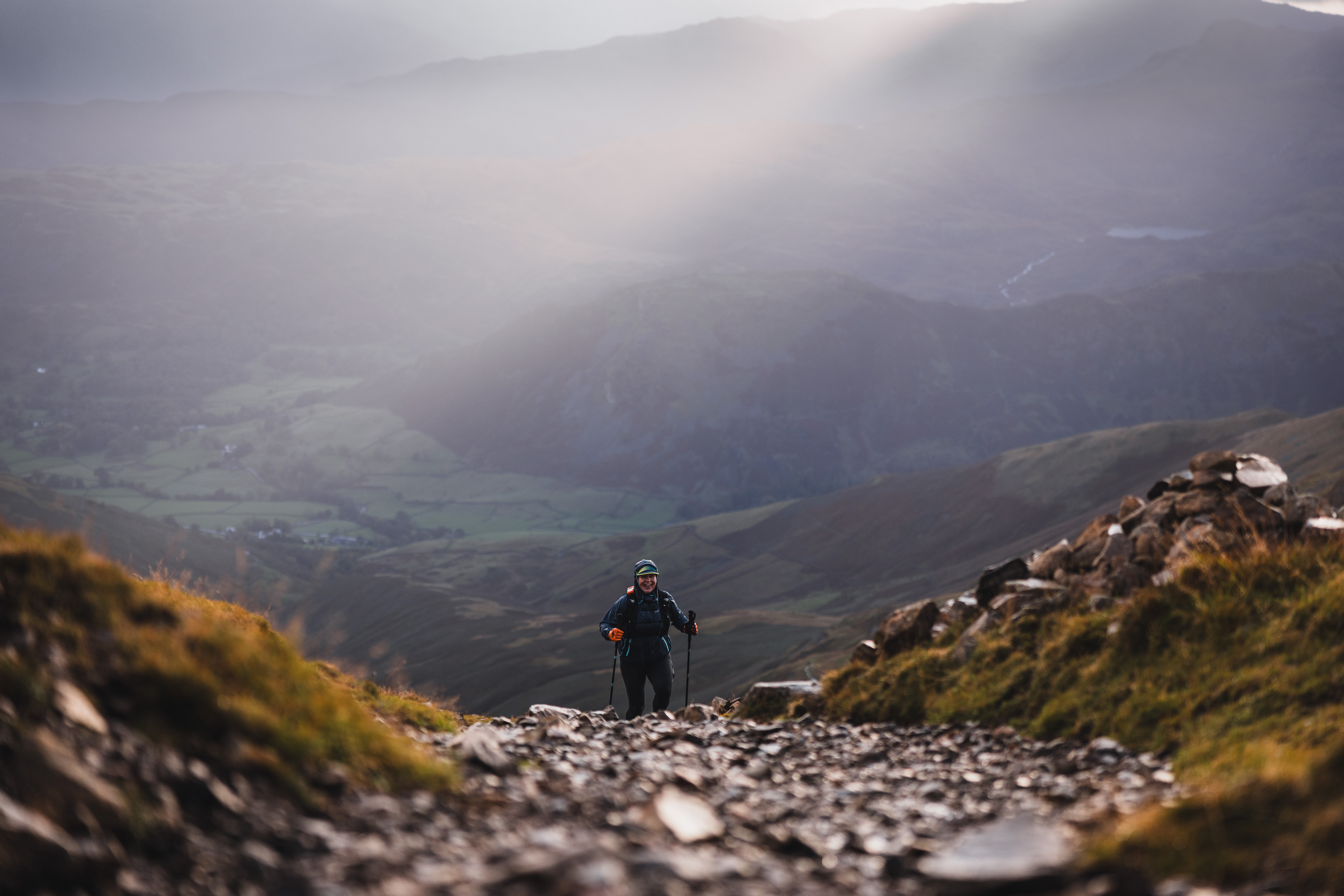
As I started the Fairfield climb, the skies opened up for a sharp shower, which was quickly followed by a stunning double rainbow arching over the valley.
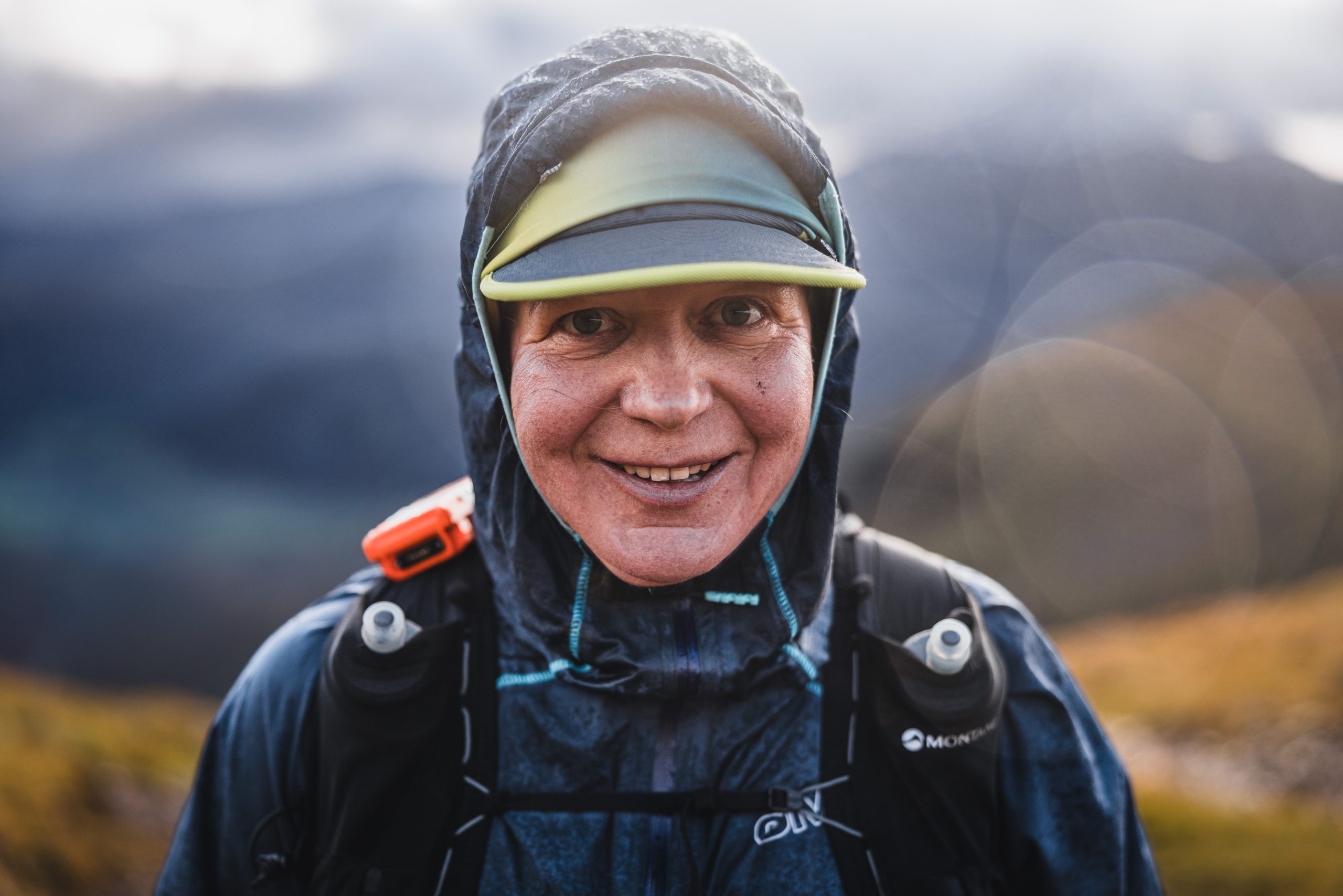
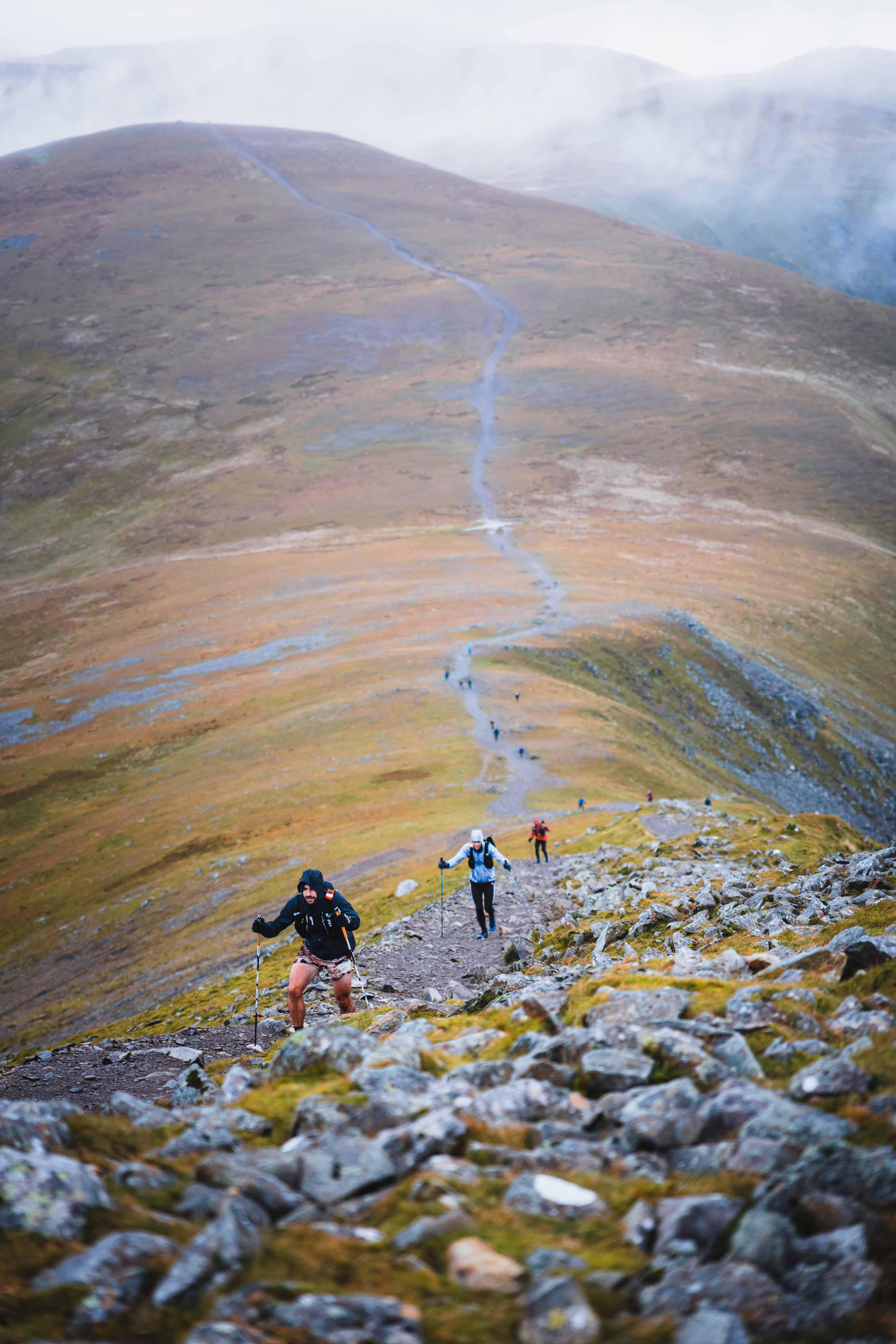
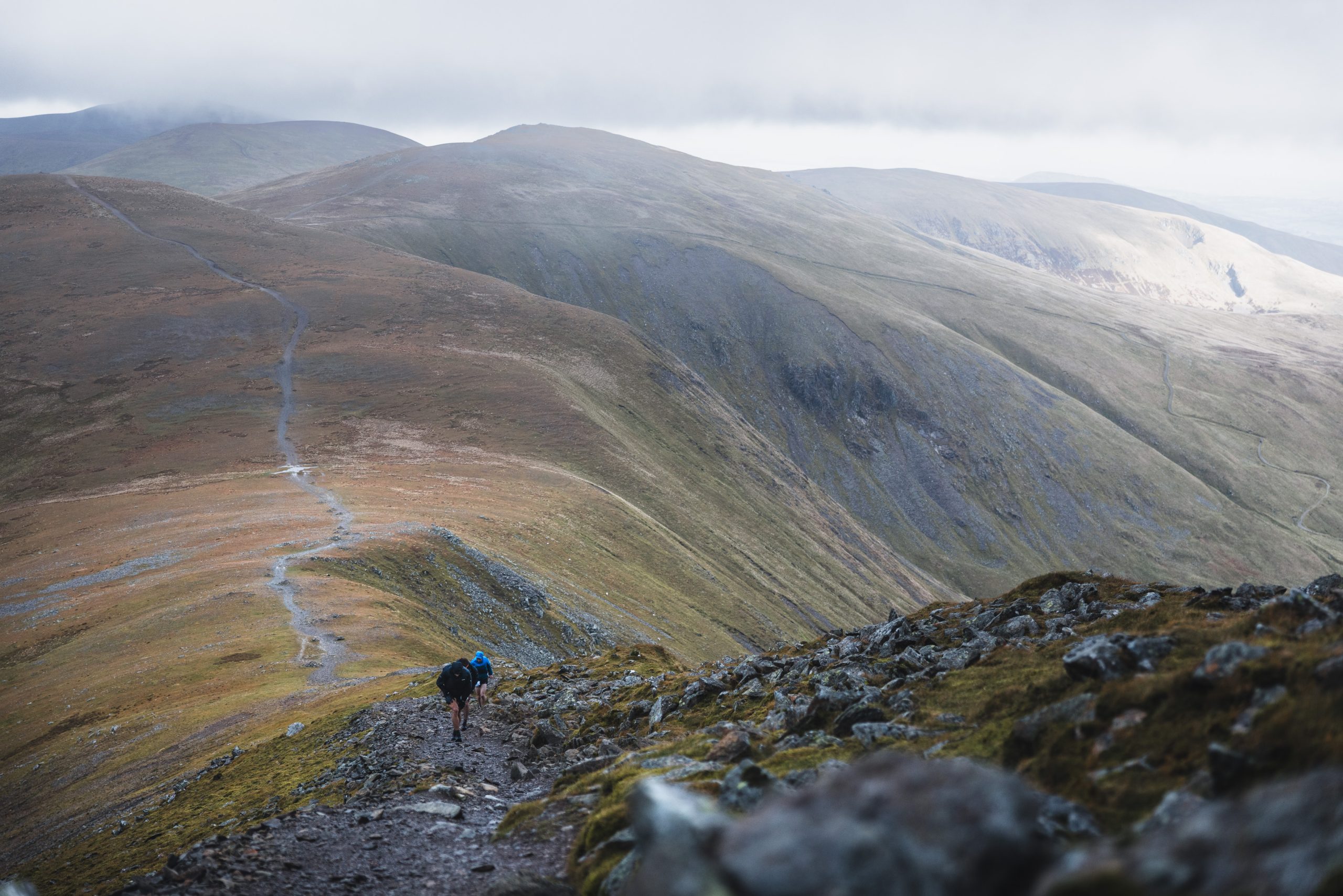
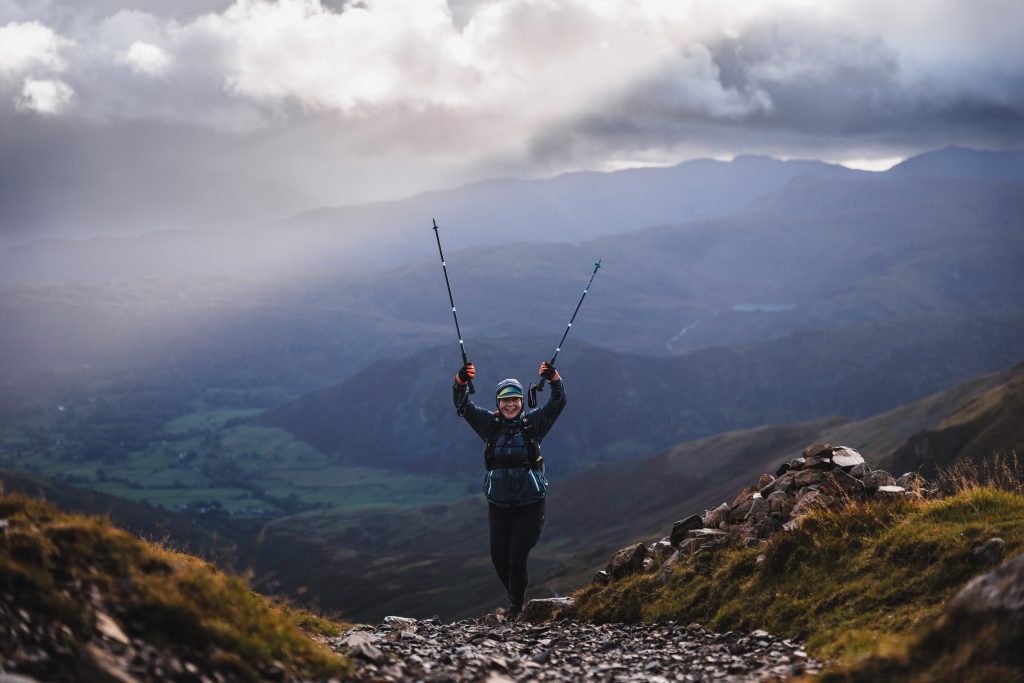
Reaching the top of Fairfield felt like a massive milestone – I knew I’d broken the back of this beast! Bonus: one of the amazing event photographers was just about to descend from Fairfield and started shooting away as I crested the climb. I was thrilled to know I’d have an epic memento from this adventure.
We shared a quick chat, but looking at the time, a creeping sense of dread set in. I was very worried about the upcoming descent and my plan to reach the halfway haven of Ambleside before dusk.
I wasn’t wrong to be worried. The drop down into Ambleside is the most technical stretch of the entire course. It featured sharp ups and downs – after all, we scored another two Wainwrights – Hart Crag and Dove Crag- some light scrambling, and a punishingly steep final descent.
Below me, the lights of Ambleside were glittering – it looked so close, but felt impossibly far. The sun was setting behind the western peaks, casting this beautiful, fading light over the valley. Soon, the darkness swallowed us completely, and I had to stop and rummage to fetch my headtorch.
In the dark, I ended up teaming up with a lovely Japanese runner. We trauma-bonded over the technical terrain and hammered down the final descent together.
As the gradient finally eased and we hit the tarmac of Ambleside, the smell of pizza from the town drifted through the cold air. I can’t explain what that smell does to a tired runner, but it put an instant spring in my step. We jogged into the Ambleside aid station at around 19:35 PM. It was lovely to see Shirin and OJ there stuffing their faces. I felt good; quick change of the shoes and socks – feet looked like pale raisins but no damage whatsoever – the Sealskinz did their job – demolished a few slices of pizza, rearranged water, stripped down from waterproof jacket and gloves – it was very mild in the valley and I got ready to head out at 8 pm on the dot. No faffing, no wasting time. I was eager to run.
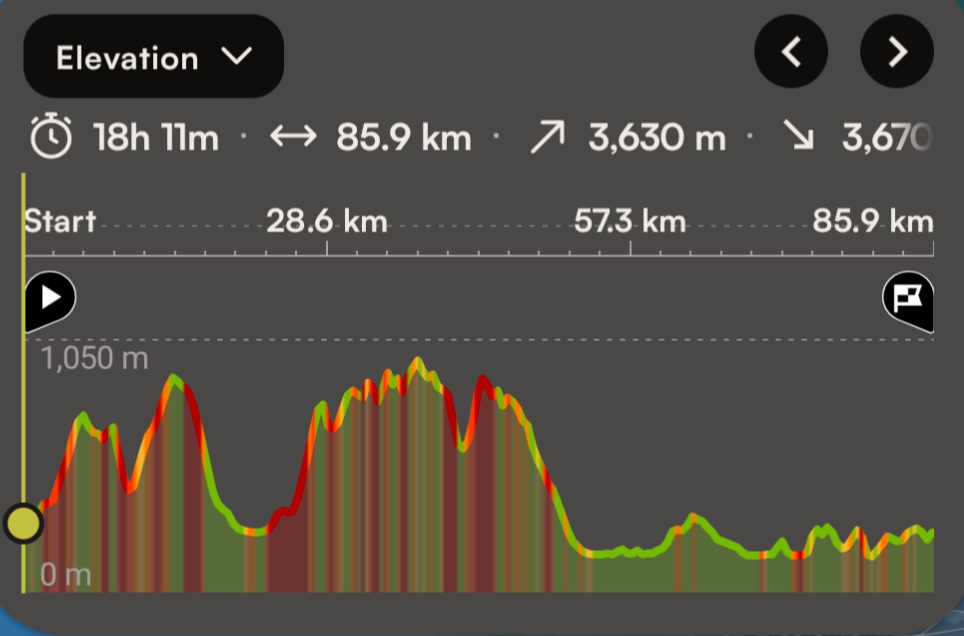
In Ambleside, I was in the 255th position. The second half looks flat on paper (or in comparison to the first 50k) but in fact the profile can be compared to the infamous Beachy Head in Sussex. I popped my headtorch on and left into the night.
Ambleside to Cartmel: The Night Shift
📍 Ambleside (#255)🕓 19:35 | ⏱️ 11:35 | 🏃 51.6 km | ⛰️ +2,800 m
The course out of Ambleside follows the River Rothay. I was pleasantly surprised to find it signposted with arrows that glowed brightly whenever my headtorch hit them. You had to be incredibly careful here – the race organisers were very specific about not running along the roads, and penalty points were waiting to be dished out for the disobedient.
I quickly started catching up with runners who had left Ambleside ahead of me. I was full of energy and eager to run, but it turned out most of the field had resorted to walking. I decided to play a game to keep my mind occupied: spot the headtorch light in the distance and catch it.
Shortly after, I caught up with Shirin and OJ, who had left the checkpoint 20 minutes ahead of me. They had decided to walk – Shirin had picked up an injury but was determined to finish.
The course profile on paper for this second half is so misleading. It looks flat with just a couple of bumps, but in reality, it can be compared to the infamous Beachy Head route down south. I was well aware that 800+ meters of elevation over 30+ kilometres is no joke, but I still got burned by it. The route wiggled through the woods, skirting the west bank of Windermere in places. It was deeply boggy and wet – so it was bye-bye dry feet.
I had carefully plotted my route before the race using the official map and the organiser’s GPX file (a quick warning for future runners: the official GPX is just straight lines between checkpoints!), but a small navigation error still managed to sneak in. I missed a path, but fortunately, the race organisers had signposted the correct way.
The route took us through some wiggly woods and semi-technical terrain. As I was contemplating exactly where to put my foot next on a tricky, rocky downhill, the ground simply slipped away from underneath me, and I ended up hard on my bottom. Luckily, I landed on a relatively flat slab of rock, so only my ego and my left butt cheek got bruised. But it certainly shook my already wobbly confidence on the wet rock, and I was incredibly careful with how I moved forward after that.
I kept powering through, catching small groups of runners one after another. Then, I hit the last climb before the final feed station, and I could feel the steam rapidly departing me. I decided to take out my poles and power through the fatigue.
The Finsthwaite Oasis
📍 Finsthwaite (#204)🕛 00:12 | ⏱️ 16:09 | 🏃 75.0 km | ⛰️ +3,300 m
I finally got to the Finsthwaite feed station at 0:12 AM. Deep down, I had been hoping to be finished with the race by this time! It was an absolute slog, even though I was moving fast enough to climb up the rankings from 255th at Ambleside to 204th, passing dozens of people along the way.
I ran into the aid station and immediately went for the real food. I grabbed a couple of slices of baguette with cheese (savoury all the way!), drank some Coke, topped up my bottles, and swapped out my headtorch. I even bumped into my Japanese friend again (who I had passed earlier on the course) before heading back out into the final 12km.
The Final Push and a Dead Garmin
As I left Finsthwaite, the volunteers told me to get the poles out, and they were absolutely right. The last climb and descent were ridiculously muddy and slippery. It was a complete slog, but I just kept on picking people off one by one.
I was so glad when I finally saw the tarmac, but right at that moment, my Garmin died a sudden death. To make matters worse, my phone only had 11% battery left. I had been listening to music since Ambleside – a special playlist Terry made for me for the Lakeland Trails – and it had genuinely kept me flying, but now I was running blind on battery life.
There was a chap running just ahead of me, and because a directional sign seemed to be missing as we emerged onto the tarmac, I decided to stick to his back and follow him. I definitely didn’t want to risk getting off the course this close to the end.
Those last 3km on the tarmac felt like they lasted forever, but soon enough, Cartmel appeared. We hit the familiar square, running right past our Airbnb. It was physically painful to run past a warm bed, but the job needed to be done.
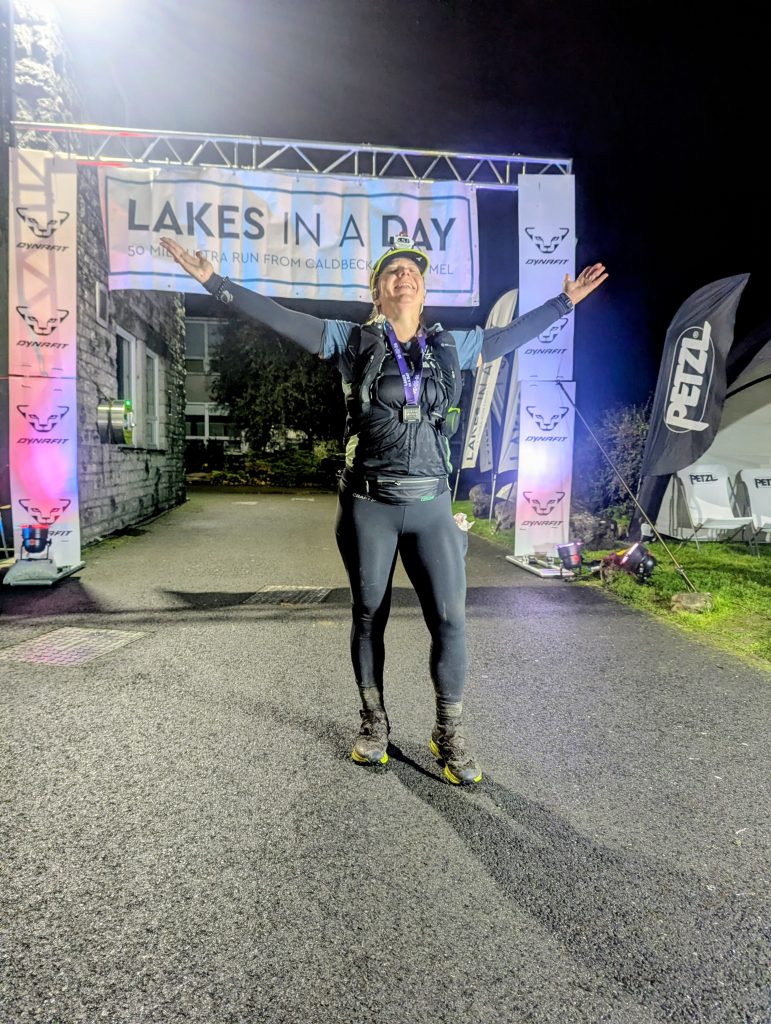
I crossed the finish line in 18 hours and 57 minutes. It might not have been the exact time I originally wanted, but I was incredibly happy and welcomed the feeling of finishing strong over those last few miles.
The Aftermath: A Tale of Two Halves
📍 Cartmel (#191)🕒 03:00 | 🏅 Women’s #31 | 🥇 V40 #15
Crossing that finish line after 18 hours and 57 minutes was a blur of sheer relief, exhaustion, and massive pride.
When I finally got to look at the official results, the strategy of holding back in the mountains and grinding through the dark really showed. From leaving Ambleside in 255th place, I finished in 191st overall. That is 64 places gained during the “Night Shift.” It was the ultimate proof that pacing the brutal first half, fueling right, and training on tired legs down south actually pays off.
Lakes in a Day is truly a race of two completely different halves. The first 50km is a relentless mountain survival test against gale-force winds, freezing rivers, and sheer rocky climbs. The second half trades the exposure for a gritty, boggy, undulating mental battle in the pitch black. It demands absolute respect and a very versatile set of skills.
It took every single lesson I have learned over the last two years of racing up north – every chafed arm, every frozen toe, and every calorie miscalculation – to get across that line feeling as strong as I did at the end.
If you are looking for an ultra that will test everything you have, both physically and mentally, put Lakes in a Day right at the top of your bucket list. Just remember to pack your poles, bring a spare headtorch battery, and embrace the wet feet.
Until the next adventure.
Have you ran the Lakes in a Day, or are you planning to tackle your first Lake District ultra?
Let me know in the comments below, and don’t forget to check out my 10 Tips for Surviving a Lakes Ultra from a Humbled Southerner before you pack your kit bag!
Frequently Asked Questions
What was your most crucial piece of kit?
Definitely my Z-poles. They delayed the inevitable destruction of my quads on the steep descents and stopped me from face-planting into the endless bogs. A close second is my absolute favourite hack: fleece-lined rubber builder gloves. They are cheap, completely waterproof, and kept my digits attached when the fells threw their worst at us. Honourable mention goes to my trusted OMM waterproof jacket for acting as a literal forcefield against the gale-force ridge winds.
How do the race day logistics work for a point-to-point route?
Logistics for a 50-mile point-to-point race can be a nightmare, but the organisers make it surprisingly smooth. The absolute smartest thing you can do is book accommodation within crawling distance of the finish line in Cartmel. On race morning, a coach scoops you up and dumps you at the start line in Caldbeck. You will be incredibly grateful for this setup when you cross the finish line and your legs refuse to bend.
What are the feed stations like?
There are three main ones (Threlkeld, Ambleside, and Finsthwaite). Even though I was proudly rocking ‘party pace’ toward the back of the pack, they were still fully stocked with an amazing food selection. You won’t be left fighting for crumbs just because you’re out there getting your money’s worth on the course.
How big of a running vest do I need for all that kit?
I used a 20L bag (older incarnation of this Montane Gecko 20l). It is probably a little bit on the larger side, but you need to factor in carrying extra fluid on the massive, soul-sucking stretch between Threlkeld and Ambleside. With all the mandatory kit required, trying to squeeze it into my usual 12L Camelbak was like trying to stuff a sleeping bag into a sock.
How do you fit everything in without the pack weighing a ton?
Audit your snacks! This was my biggest rookie error – carrying way too much heavy, “wet” food (gels, baby food pouches, you name it). For Lakes in a Day, I swapped the roaming buffet for Precision Hydration liquid carbs and some light chia chews and mini flapjacks. It brought my total pack weight down to under 4kg (plus water). Also, stuff your mandatory spare warm layers into a ziplock bag and literally sit on it to force all the air out. It’s the poor man’s vacuum seal – it waterproofs your gear and shrinks it down massively so you don’t feel like a pack mule.
How does the Ambleside drop bag work?
There is a drop bag at Ambleside, but the rules are ruthless: it only allows a pair of shoes and socks. No rogue snacks or other items are allowed. But having fresh footwear was glorious. I ran the first half in Sealskinz waterproof socks to survive the river crossing and the bogs. At Ambleside, I swapped to fresh shoes and a clean pair of double-skinned Harrier socks. Taking five minutes to dry my pale, raisin-like trench feet and apply fresh Vaseline single-handedly saved my race.
How strictly is the mandatory kit list enforced?
Incredibly strictly – and for good reason. You will get a thorough shake-down at registration, and they can spot-check you on the course. Do not try to cheat the list just to shave 50 grams off your back. The weather in the fells can turn lethal in a matter of minutes, and Mountain Rescue won’t be impressed that you wanted to run ‘light and fast.’
How to prepare for LIAD?
Everything you need to know is in ‘How to Survive Your First Ultra in the Lakes: 10 Tips from a Humbled Southerner.’
How long is the Lakes in a Day race?
Lakes in a Day is an end-to-end 55-mile (approx. 88 km) ultra-marathon across the Lake District, running from Caldbeck in the north to Cartmel in the south.
What is the elevation gain of Lakes in a Day?
The course features a staggering 4,000 meters (approx. 13,000 feet) of total vertical ascent across 18 named high points.