The Essential Dog Hiking Checklist: Gear You Need for Long UK Trails
Planning a long UK trail adventure with your four-legged best friend? Welcome to the ultimate hiking guide for dogs. Knowing what to pack is just as important for your pup as it is for you. In this post, we break down all the hiking with dog essentials, from hydration and trail etiquette to the best dog hiking equipment for rough terrain and emergencies. Whether you’re hitting the North Downs Way or exploring the mountains, use our trail-tested checklist to ensure your next dog hiking trip is safe, comfortable, and unforgettable.
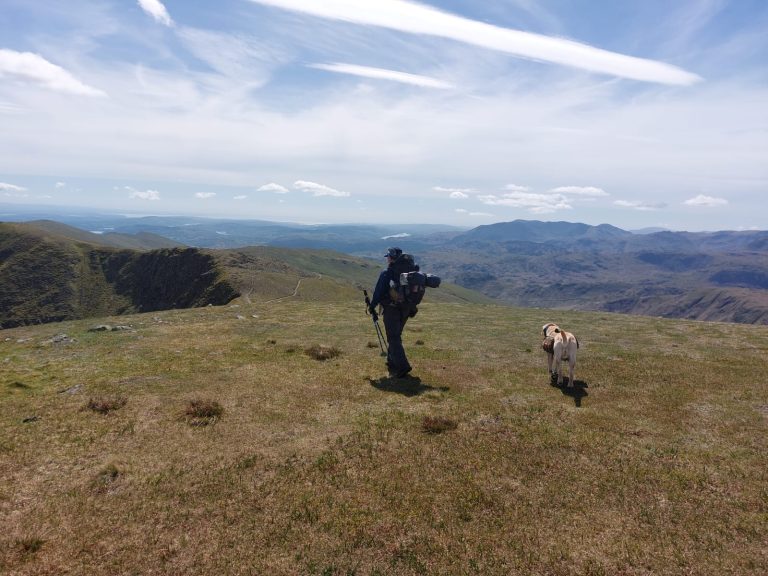
This list comes straight from the trail-tested wisdom Poppy and I gathered on everything from the North Downs Way to the wild Rhinogydd mountains. No fluff, just the gear that keeps us moving and grinning.
Dog Hiking Essentials At a Glance
Core Kit: Collapsible bowl, water filtration, high-energy snacks/meals, and a hands-free bungee lead.
Safety & First Aid: Pocket tick remover (CVet pen), vet wrap, antiseptic wipes, emergency booties, and a dog sling.
Weather Prep: Cooling bandana and pet-safe sunscreen for heat; Polartec fleece or raincoat for wet crosswinds
Trail Etiquette: A smell-proof poo-stash solution (like a Dicky Bag or PupPouch).
Pack Weight Limit: Keep the load light; ensure your dog carries a maximum of 10–15% of their body weight.
Key Focus: Uncompromised safety and comfort, turning a test of endurance into a shared sensory adventure.
Tested On: The North Downs Way, the Rhinogydd mountains, the Peak District, and the Lakes.
Core Dog Hiking Equipment
These are the items you always pack, no matter the distance or terrain. Because let’s face it, your dog isn’t just tagging along for the views—they’re the real MVPs of the hike.
Collapsible bowl: light, quick-drying, and easy to stash. Absolute necessity unless your dog is cool with drinking straight from a bottle or bladder (Poppy’s got the skills, but most don’t).
Water + filtration: dogs drink way more than you think, especially on hot or technical days. Make sure you have water with you unless you’re confident there’ll be plenty of rivers, streams, or lakes to sip from. If your dog isn’t used to random water sources, consider a filtration system to avoid an upset tummy. Poppy’s stomach is basically iron—she drinks from everything from nearly dried-out streams to cattle troughs.
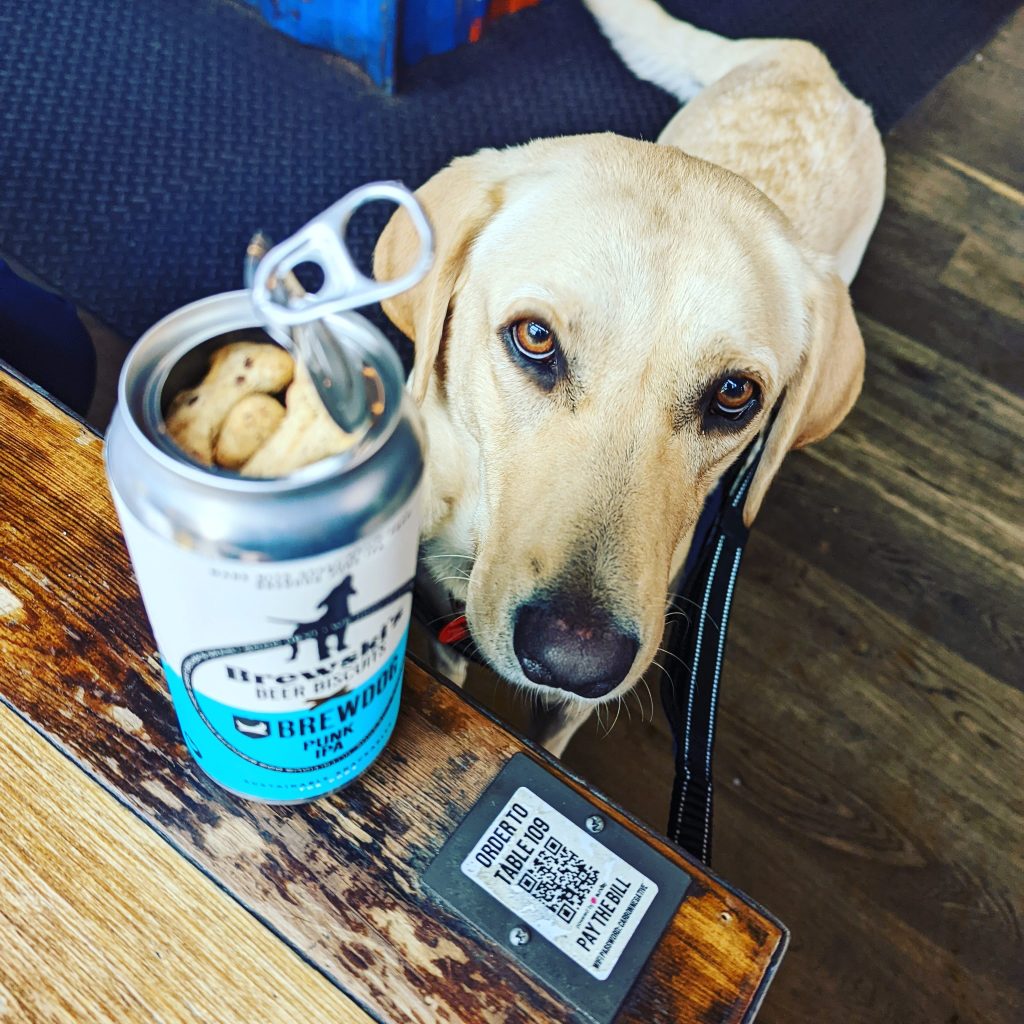
Snacks + a proper meal: if your hike crosses dinner time, pack real food. On walks, dogs are happy to snack, but on runs? Different story. Dogs should have an empty stomach before vigorous exercise to avoid bloat, which can be lethal. If I know we’ll go past dinner time, I bring her food too, so she can enjoy her din-dins while I’m enjoying mine at the pub.
Harness + lead: (+ Halti nose harness if your dog is a puller) – hands-free leads are ideal for rough ground; make sure the harness doesn’t interfere with movement. I prefer bungee leads and often use our running line for walking, especially on multi-day treks. For local walks, especially when Poppy’s off-lead a lot, I take our double-ended lead, which is easy to wrap around my body when she’s running wild.
Poo bags: obvious, but essential. Because nobody wants to be that person leaving a mess behind.
Not So Obvious Hiking with Dog Essentials
These are the items that quietly save your day – the ones you only appreciate after a few long hikes.
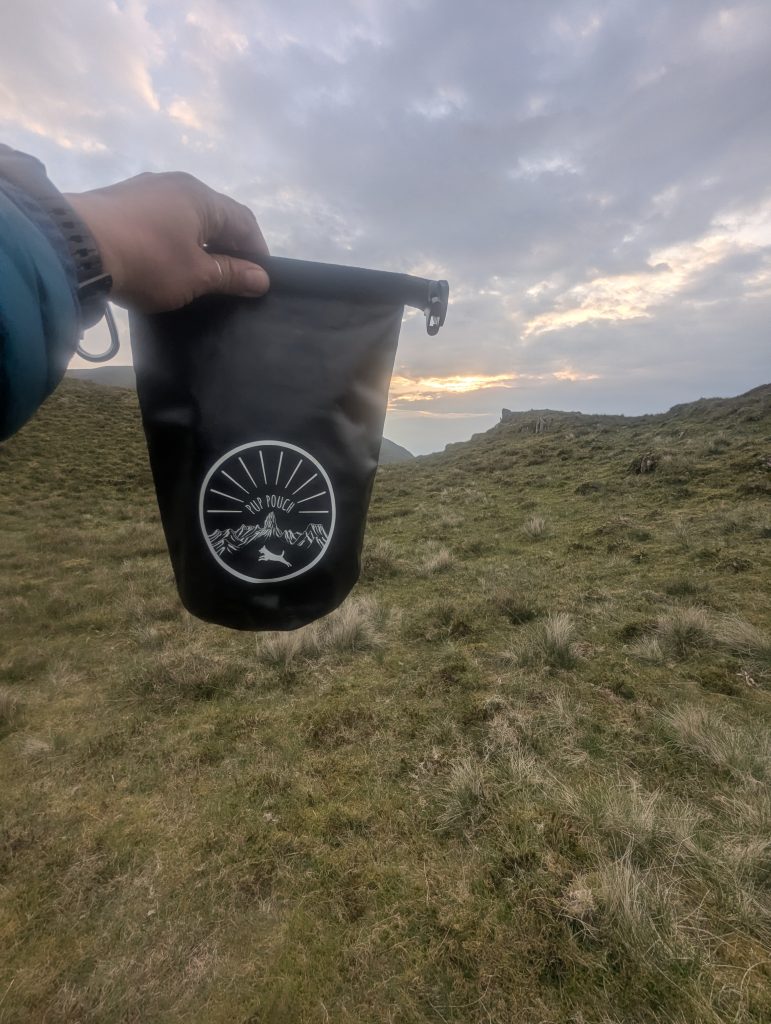
Poo-stash solution: a Dicky Bag or smell-proof PupPouch so you’re not carrying smelly bags for hours. I discovered the Dicky Bag at a canicross race in Wales and immediately purchased one – it is permanently attached to my canicross belt. For our hikes and multi-day treks, I use PupPouch – smell/leak proof, comes with a strap or can be stashed in your backpack.
Tick remover: fast, safe removal matters on UK trails, especially in the Lakes and Snowdonia. We treated Poppy just before our adventures, but she still picked up ticks daily! In Kent, it’s not so bad, but there was one instance when she had five on her head/neck. I use CVet Tick Tweezer Remover – a pocket-sized pen-style tool designed to remove ticks safely from working animals and pets.
Booties: for emergencies or pad injuries. I have two booties for her and always take them when we venture into wilder terrains and mountains. She scraped her pad once in the Peak District; fortunately, this happened on the way to the B&B, as she couldn’t walk on tarmac.
First aid kit: include vet wrap and antiseptic wipes. Wish I had it when she scraped her foot in the Peaks!
Emergency dog sling: if you can lift your dog, this is worth its weight in gold. Poppy weighs 33kg so it’s unlikely I could carry her down from a mountain, but if your dog isn’t the size of a little pony, please consider this. Rescue services will only attend to dogs if there are no human emergencies.
Small towel: for drying, cleaning paws, or giving them a warm layer. Or getting your dog presentable before jumping on a bus or taxi.
Blanket or lightweight mat helps your dog settle properly during breaks. When I first adopted Poppy she was very territorial in pubs/restaurants. I started to carry a blanket to indicate where her space was. She settled since then and doesn’t mind being on the floor, but you know best what your best friend needs to be comfy.
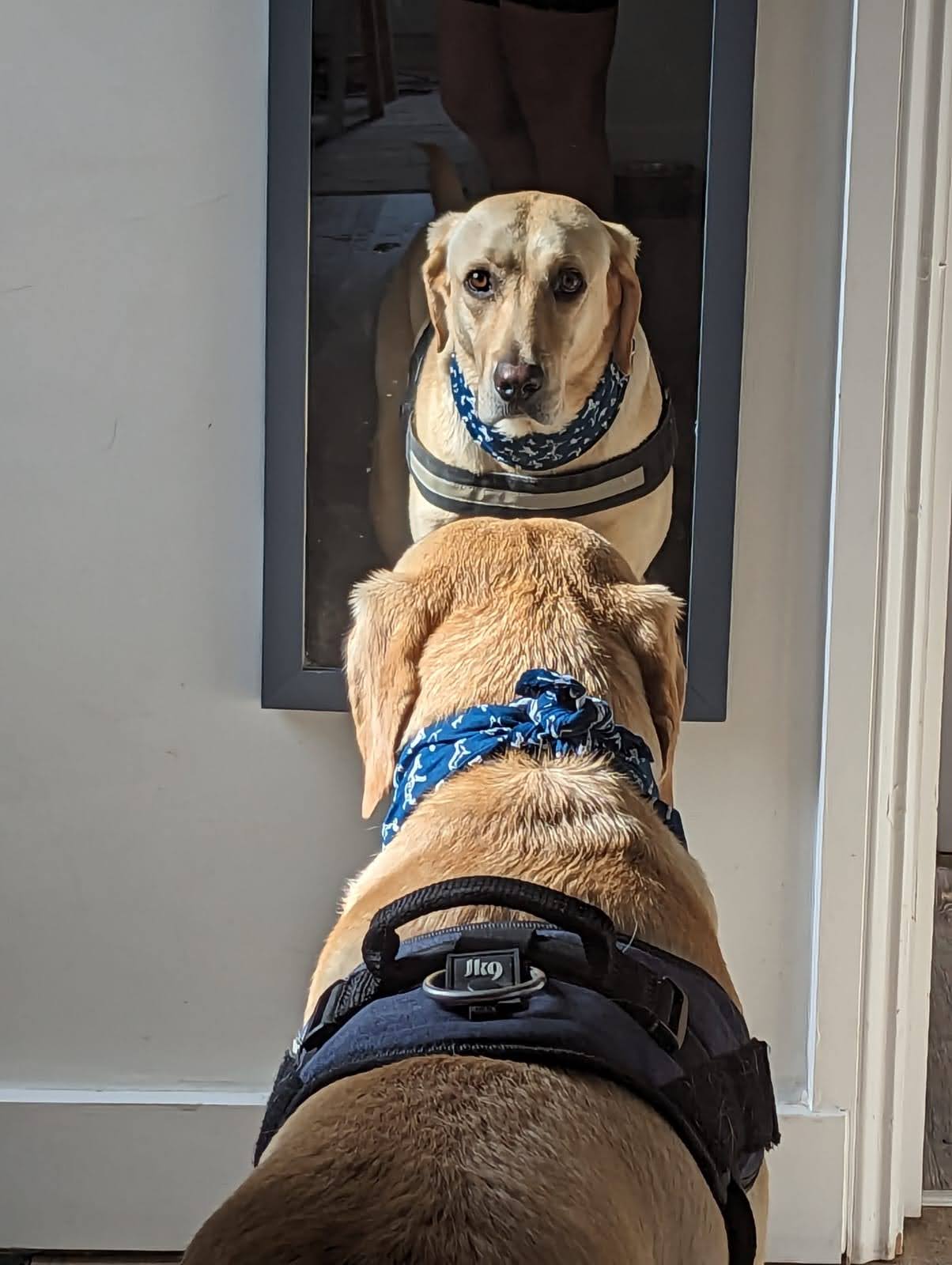
Hot weather kit: Cooling bandana + dog-safe sunscreen: Poppy managed to burn the narrow strip of skin between her snout and nose! It was bad!!! For warm days, I like to put a wet bandana made of thick cotton — it cools her by having something cold by the main arteries on her neck.
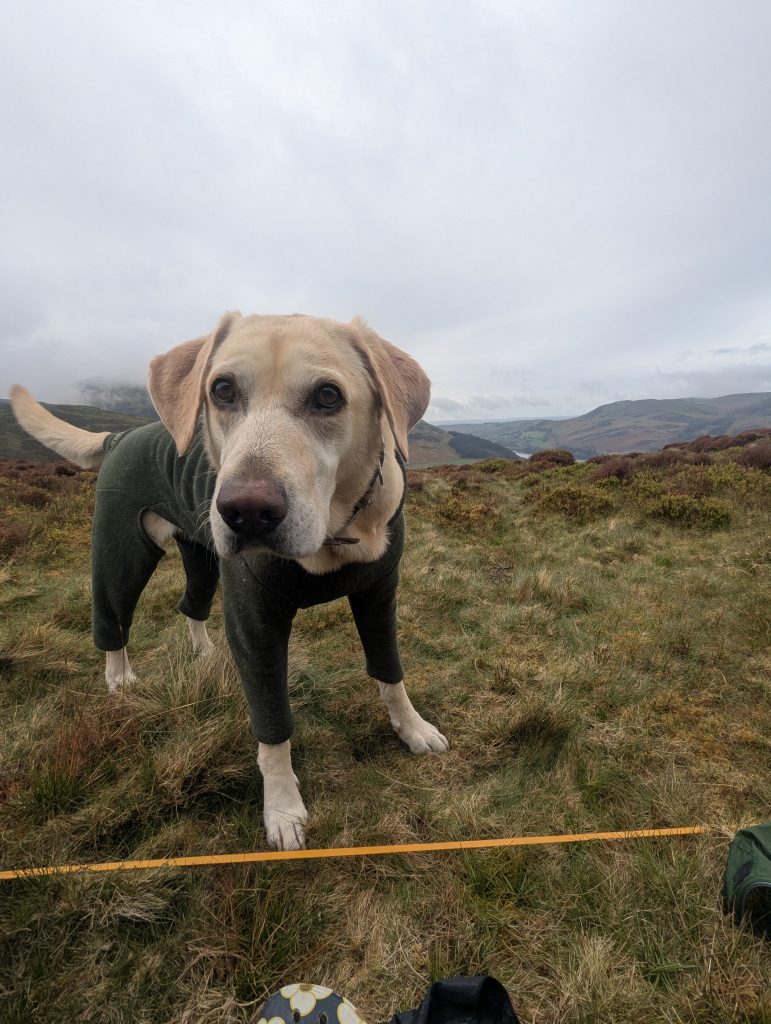
Cold weather kit (and light-coated dogs!): dog rain jacket/fleece jacket: wet fur = cold dog. Poppy, as a lab, has a double coat but she still got cold when we were waiting for a bus in December in the Lakes with a crosswind cutting through us. We were soaked because it was raining all day, we were out supporting friends racing the Tour of Helvellyn. She got so cold her tail went limp. I now have a fancy Polartec suit for her which she hates with passion, still on the market for a raincoat though!
Why This Kit Matters
Long days on the trail aren’t just about covering miles – they’re about everything your dog experiences along the way. From shifting terrain and weather changes to new smells and unexpected encounters, your dog is soaking it all in. That’s why the right gear isn’t just nice to have; it’s essential.
Good kit means more than protection. It’s about comfort that keeps your dog confident and curious, turning long hikes from a test of endurance into a shared adventure. As one seasoned hiker wisely said, “Long days aren’t just physical; they’re sensory adventures. Learning to pause and care for your dog’s needs turns the hike from a challenge into a shared joy.”
How to Pack Smart
A few practical tips from the miles:
Keep dog gear accessible: water, snacks, first aid, and poo‑stash should be easy to reach.
Introduce new gear on short, familiar walks so your dog can adjust without pressure.
Don’t overload your dog with weight; most dogs shouldn’t carry more than 10–15% of their bodyweight.
Build paw resilience gradually: rocky terrain demands conditioning, not bravado.
Plan for rest: a towel or blanket helps your dog switch off properly during breaks.
A well‑packed kit turns a long hike from “survive the miles” into “share the day.” It keeps your dog comfortable, confident, and ready for whatever the trail throws at you, whether that’s a boggy ridge, a scramble, or a rainbow settling over the hills at camp.
About the Author
Syla is a seasoned ultra runner, hiker, backpacker and dog lover who’s logged countless miles with her rescue dog, Poppy. Drawing from real-world adventures across the UK’s toughest terrains, she shares practical, no-nonsense advice to help fellow outdoor enthusiasts and their canine companions thrive on every hike.
FAQ: Your Quick Hiking Guide for Dogs
How much water should I bring for my dog on a long hike?
A: Dogs typically need about 20 ml of water per kilogram of body weight per hour of activity, depending on temperature and exertion. Here are some examples:
– 15 kg dog needs about 300 ml per hour. – 20 kg dog needs about 400 ml per hour. – 25 kg dog needs about 500 ml per hour. – 30 kg dog needs about 600 ml per hour.
Always carry extra water and a collapsible bowl for easy drinking.
What if my dog refuses to wear booties?
Introduce booties gradually on short walks, use positive reinforcement, and ensure a proper fit. If your dog still refuses, consider paw balm and frequent breaks on rough terrain.
Can I use human sunscreen on my dog?
It is not recommended to use human sunscreen because it contains harmful ingredients that can be dangerous if your dog licks or digests them. Always use dog-safe sunscreen formulated specifically for pets.
How do I remove ticks safely?
Use a proper tick remover tool such as tick tweezer or pen tool Follow these steps to ensure safe extraction:
– Prepare: Keep your dog calm with soothing pets and treats. Put on protective gloves. – Locate: Part your dog’s fur to find the tick, checking hidden spots like the armpits, neck, groin, and between the toes. – Engage: Press the end of the CVet Tick Tweezer Remover to open the pincer claws, and place them as close to the skin’s surface as possible. – Extract: Release the pressure so the tool securely grips the tick. Pull straight outward with slow, steady pressure without twisting or jerking. – Disinfect: Clean the bite site with a safe, pet-friendly antiseptic. Wash your hands thoroughly. – Dispose: Never crush a tick with your bare fingers. Drop it in rubbing alcohol to kill it, or save it in a sealed container if you need to show your veterinarian.
What should I do if my dog gets injured on the trail?
Carry a first aid kit with essentials like vet wrap and antiseptic wipes. For serious injuries, seek veterinary help immediately.
Can my dog carry some of their own gear?
Yes, but keep the load light — generally no more than 10–15% of their body weight to avoid strain.
How do I help my dog get used to new gear?
Introduce new items gradually on short, familiar walks and use positive reinforcement to build comfort.
What’s the best way to keep my dog cool on hot days?
Use cooling bandanas, provide plenty of water, and avoid hiking during peak heat hours.