Taking your dog on an all-day hike sounds simple – clip the lead on, grab a snack, and off you go. In reality, a brilliant day out usually starts a few weeks earlier.
Dogs are enthusiastic to the point of recklessness. They’ll happily power on long after they should’ve stopped, which is why preparing them properly is the difference between a great memory… and a very sore, unimpressed dog who suddenly “doesn’t like walking anymore.”
Here’s how to build your dog up for longer days out on UK trails – sensibly, safely, and without overthinking it. Our canicross background – and Poppy doubling as my ultra‑training partner – gave us a strong starting point, but all‑day stamina still had to be built the slow way. Weekly miles on mixed ground toughened her paws, taught her how to move across different surfaces, and gave her the confidence to handle whatever the trail threw at us. That steady exposure did more for her durability than any dramatic “training plan” ever could.
This is what worked for us!
Training Stats At a Glance
Start With What Your Dog Already Does
Before we ever planned a “big day out”, I looked at what Poppy’s real baseline actually was. Most weeks, she was already doing a solid mix of movement – a mid‑week 10k, a long run at the weekend, and a weekend hike, plus all the varied local walks that make up everyday life. Nothing dramatic, nothing mountainous, just steady miles on the North Downs Way, fields, forest, coastal paths and the usual Kent gravel and tarmac. She handled it well and always finished looking like she had more to give, which made it tempting to simply stack on distance and see what happened.
But those everyday miles were the point. They showed me what felt easy for her, what her natural pace looked like, and how she recovered afterwards. That became our baseline – the place we built from rather than something to rush past. If your dog’s world is mostly familiar loops and local paths, that’s not a limitation. It’s valuable information. Start there and build up.
Canicross: The Quiet Backbone of Our Fitness
Alongside all the steady weekly miles, one thing made a huge difference to Poppy’s endurance: consistent canicross training. Those sessions gave our week’s structure – short, purposeful outings where we moved together with intention. It was never about speed or racing. It was about rhythm, repetition, and building the kind of engine that lasts all day.
Over time, those runs quietly built the foundations we needed:
Running together also taught me how Poppy moves. Canicross makes the small things obvious – when she’s flowing, when she’s bracing, when her stride changes, when her mind wanders. Because the sessions are repeatable and controlled, they became a kind of weekly check‑in. By the time we started spending hours on the trail, the base was already there. All we were doing was asking that same engine to work more steadily.
It also sharpened our communication. Feeling tiny shifts through the line, adjusting pace together, and reading each other without stopping translated beautifully to long hiking days. The miles got easier not because we pushed harder, but because we learned how to move as a team.
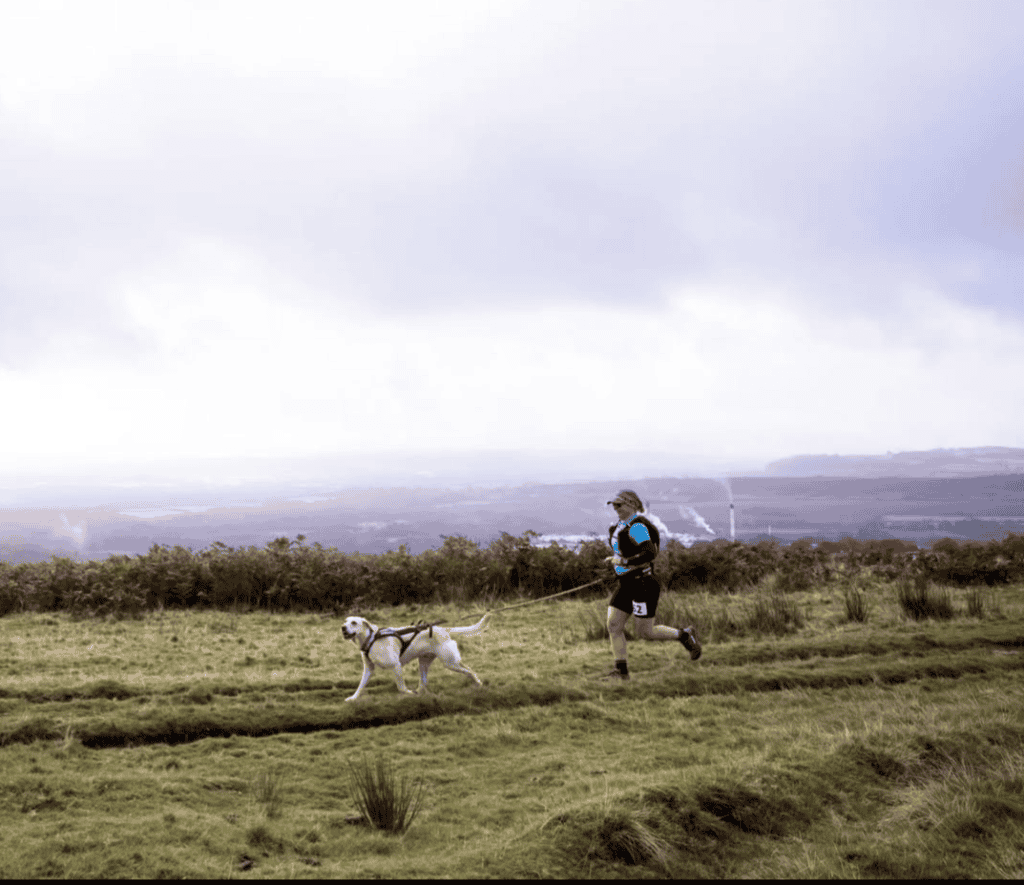 Canicross became the quiet backbone of our weekly physical conditioning [Phot: K.Bartlet]
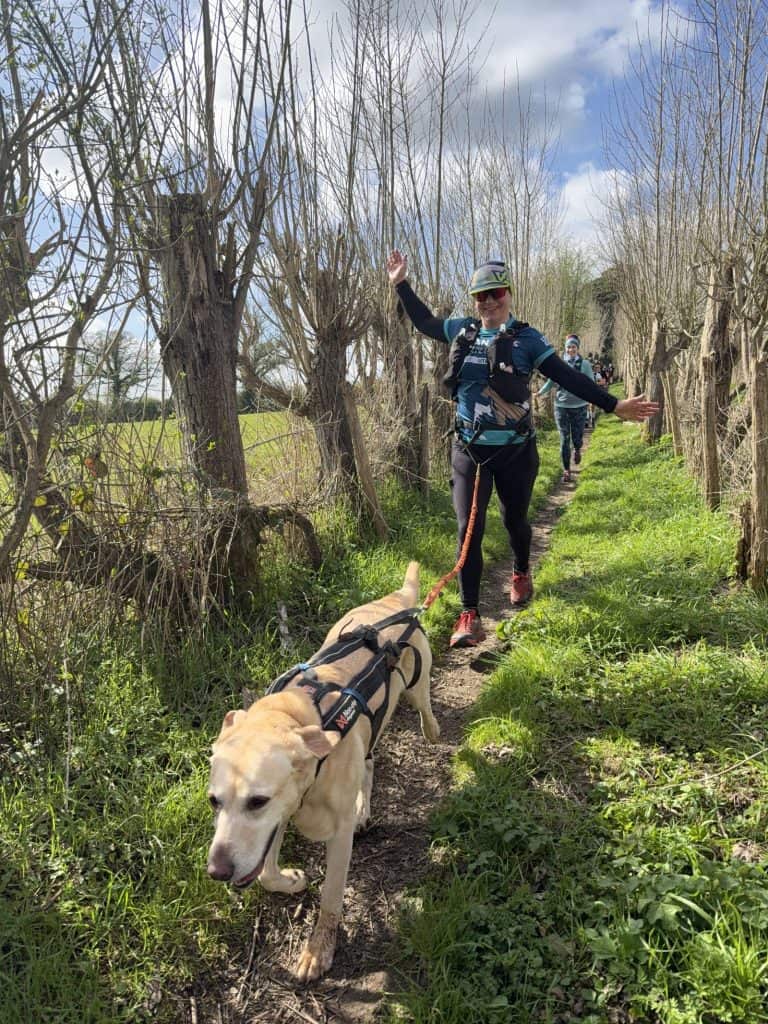 We enjoy joining local social trail running group for a weekend long run [Photo: J.Zincke]
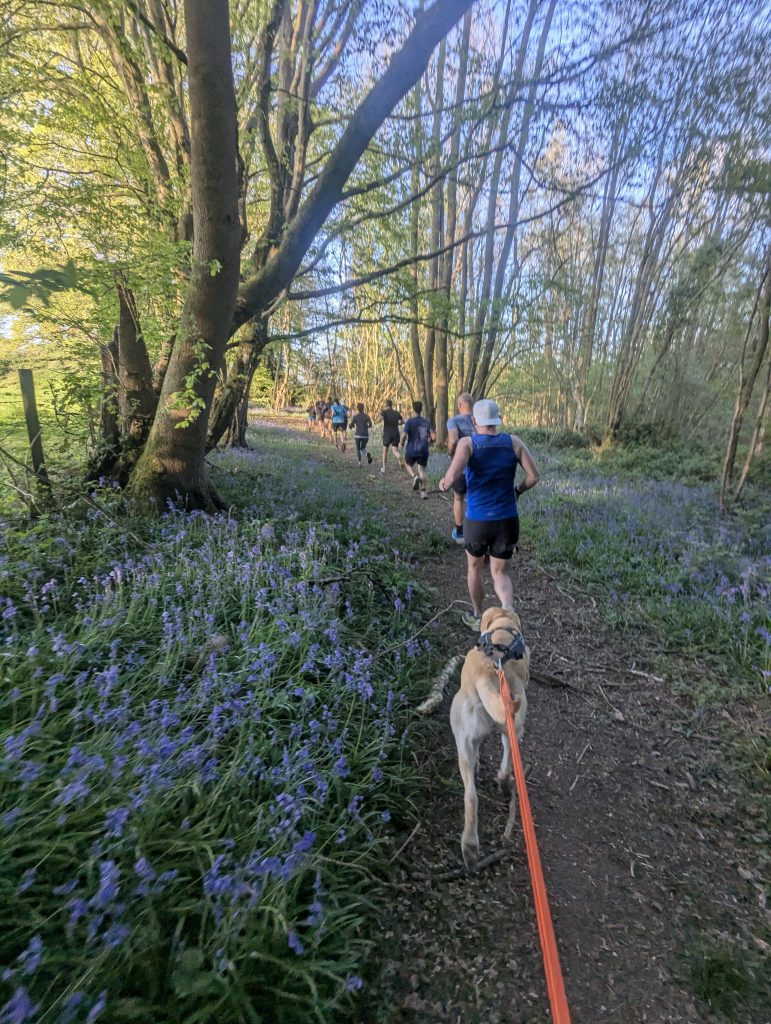 Social trail run through bluebell fields
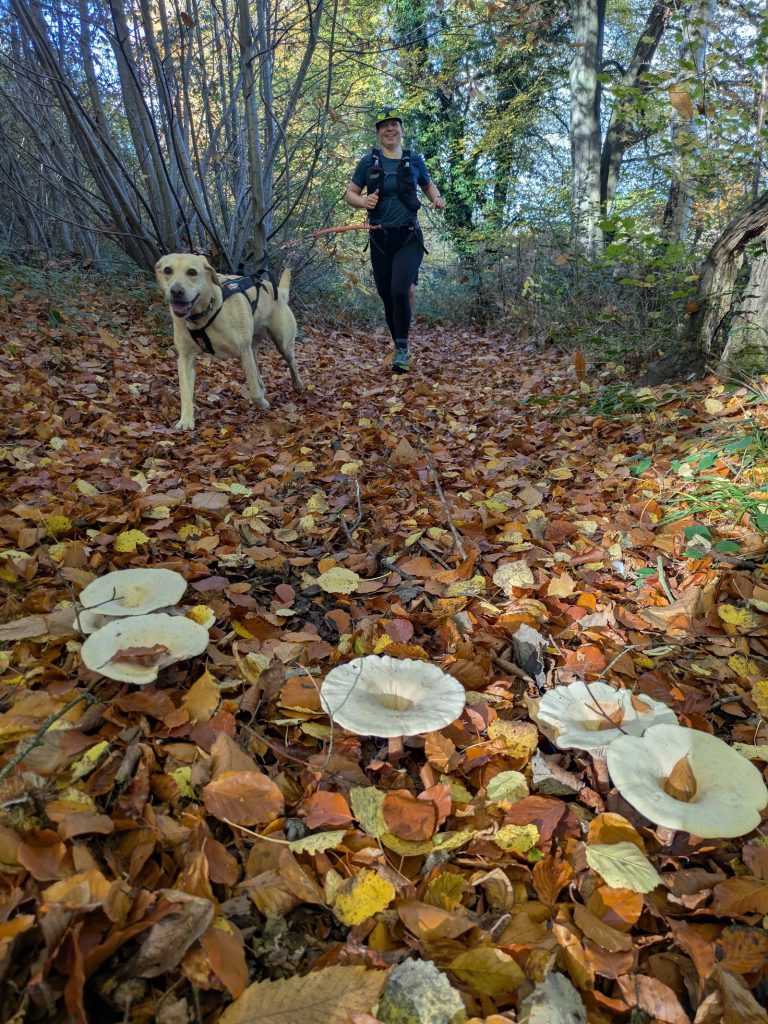 Love observing the change of seasons on our local trails [Photo: S.Shabestari]
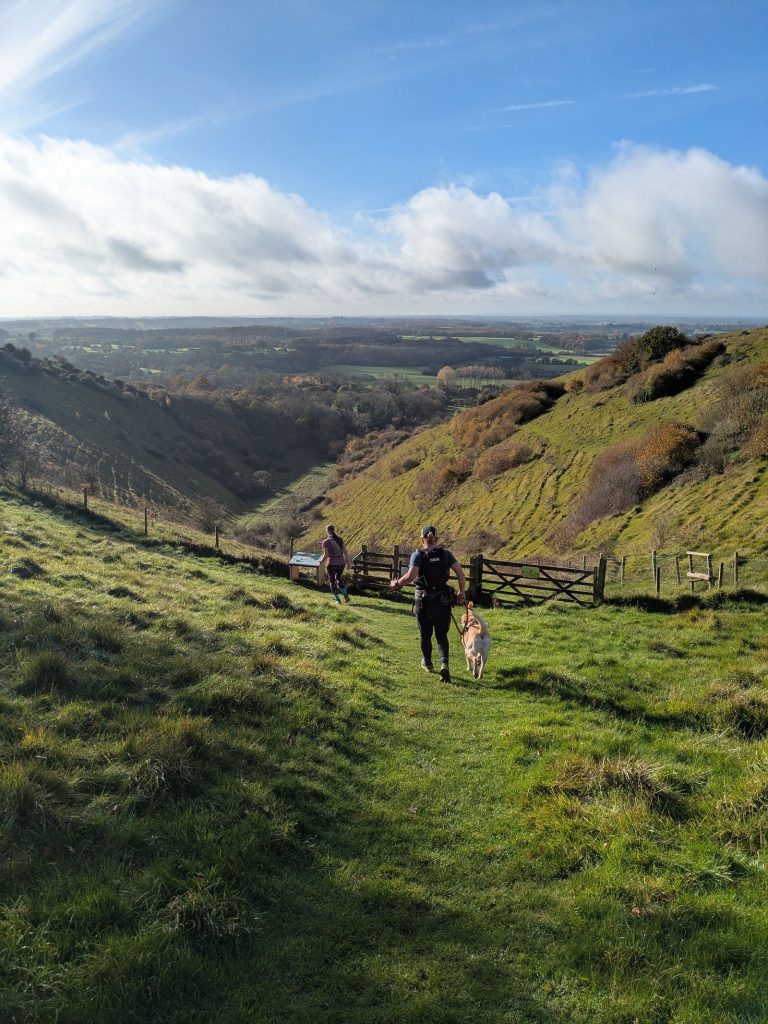 Down Wye Devil’s Kneading Trough – favourite training playground [Photo: [Photo: S.Shabestari]
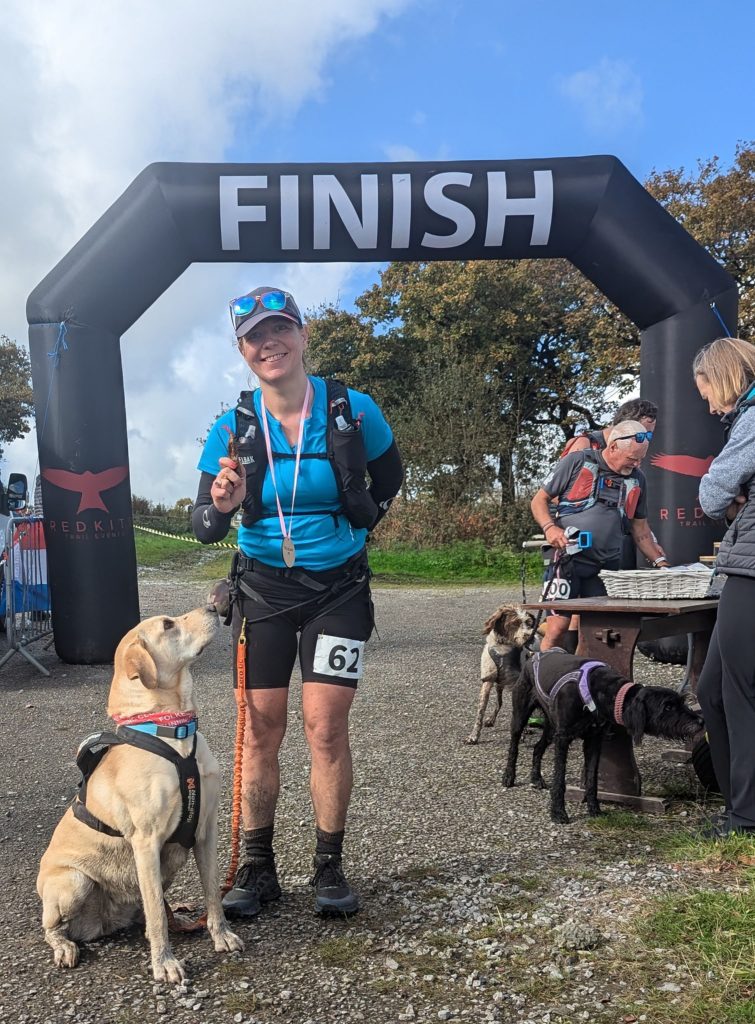 Cani Trail UK half marathon finish line
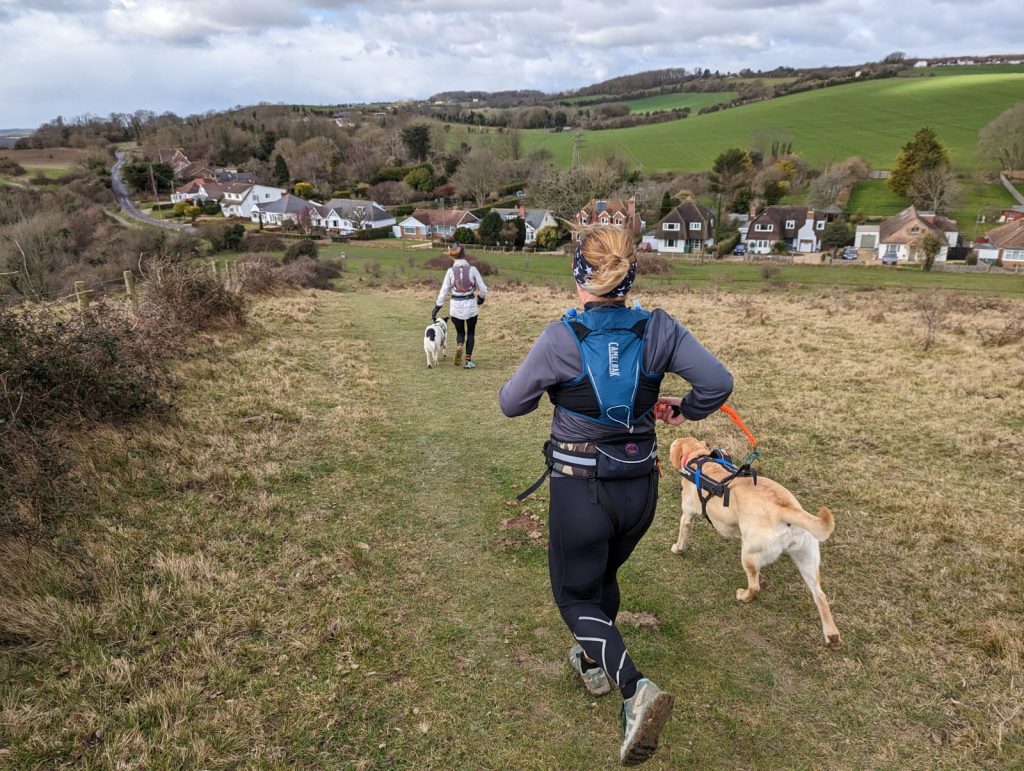 Winter training on our local hills [Photo: P.Maul]
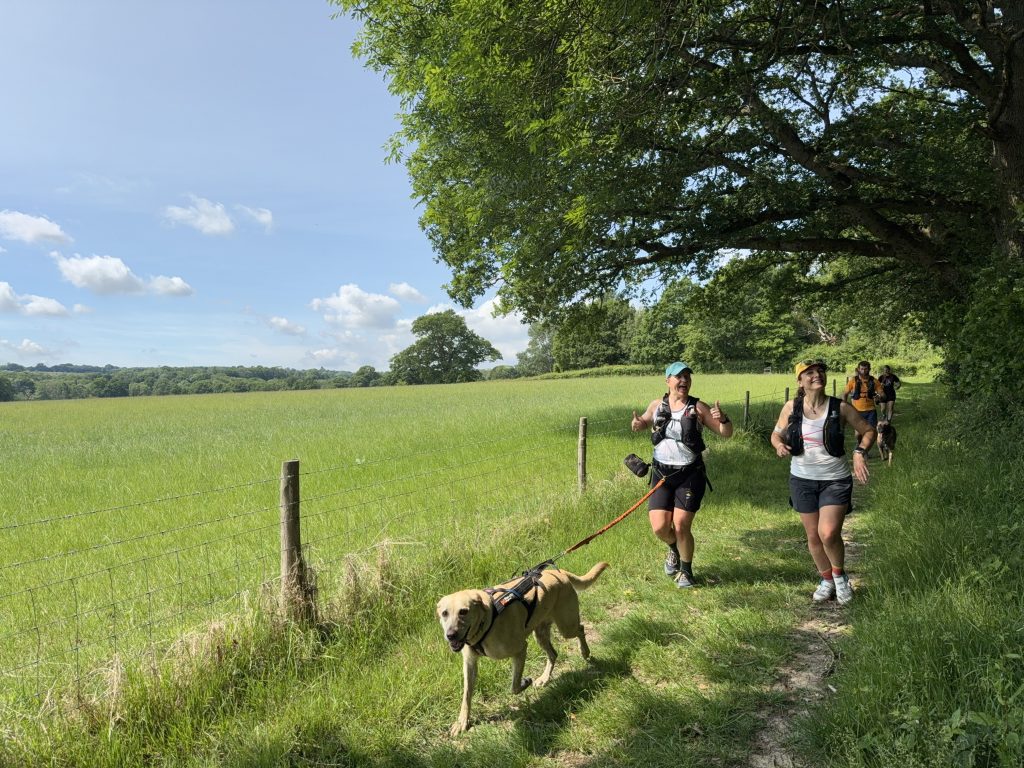 Social runs are the best [Photo: J.Zincke]
Crossing stiles – the core skill we had to learn
Stiles turned out to be their own category of training. If your dog is small, you can scoop and go. When your dog is built like a small pony, it becomes a team sport.
Poppy, fortunately, enjoys a challenge. The first hint of her potential came when she jumped clean through the back of my sofa from a standstill – an impressive moment that also made me question my life choices. From there, we built the skills deliberately. Jumping into the bathtub became our treat‑assisted training block. Then we practised hopping through low gaps in fences and small trail stiles.
Next came the more technical ones – the stiles where she needed to place her front paws on a step before committing. And finally, the big ones: the high, awkward, “absolutely not designed for dogs” stiles. We developed a technique – she puts her front paws on the top edge, I lift her back end, and she pops over like it’s the most normal thing in the world.
It’s not glamorous, but it’s practical. And like everything else, once she understood the pattern, her confidence grew fast.
Hills, Rocks, and Learning to Trust Herself
What really stood out as we spent more time on varied terrain was just how naturally brave Poppy is. Her instinct is always to step forward rather than back. New surface? Odd angle? Something she’s never climbed before? She’ll usually give it a go first and figure out the details later. It’s enthusiasm with a dash of chaos – but it works.
Rocky scrambling was our biggest learning curve. At first, she’d charge into steep, jumbled sections with plenty of confidence but not much of a plan. She’d place her paws quickly, pause, and give me this look that said, “Right… now what?” Those moments needed patience. Rushing never helped. Giving her time to assess, offering a little guidance, and letting her choose her own line made all the difference. And once she cracked even one awkward step, her whole body changed – tail up, ears forward, a glance back as if to say, “I’ve got this.”
Strong Paws Take Time
One lesson that took me a little longer to fully appreciate was just how much paws need to learn the terrain the same way muscles do. Soft ground was always forgiving. Grass, forest floor, and damp earth allowed miles to add up easily. But dry summer tracks, loose gravel, and rocky ridgelines told a different story. Those surfaces demanded more, not just in terms of wear, but in focus and recovery. Early on, I realised paw conditioning doesn’t come from bravado or “pushing through.” Expecting toughness too soon only leads to soreness, tenderness, or a dog that becomes cautious for all the wrong reasons.
So we approached it slowly, with intention. We began weaving rougher surfaces into otherwise familiar walks in short stretches rather than whole outings. A bit of gravel here, a rocky path there, always followed by something kind underfoot. After each walk, I checked her pads properly. I wasn’t just looking for cuts, but for subtle changes like warmth, smoothness, and sensitivity. And just as importantly, we respected recovery. Some days were deliberately easier. Sometimes we stuck to grass or woodland even if the weather was perfect for higher ground. Those quieter days were part of the conditioning, too.
What surprised me was how naturally adaptation happened when given time. Pads didn’t become tough and cracked. They became resilient. Movement grew more confident. She stopped adjusting her stride on stony ground and started flowing across it. By the time we committed to full days out, her paws weren’t “hardened” in the traditional sense, but they were simply accustomed. They knew the feel of rock, grit, and long dry paths, and how to cope with them without complaint.
Strong paws, I learned, aren’t built by testing limits. They’re built by patience, observation, and letting small exposures add up over time.
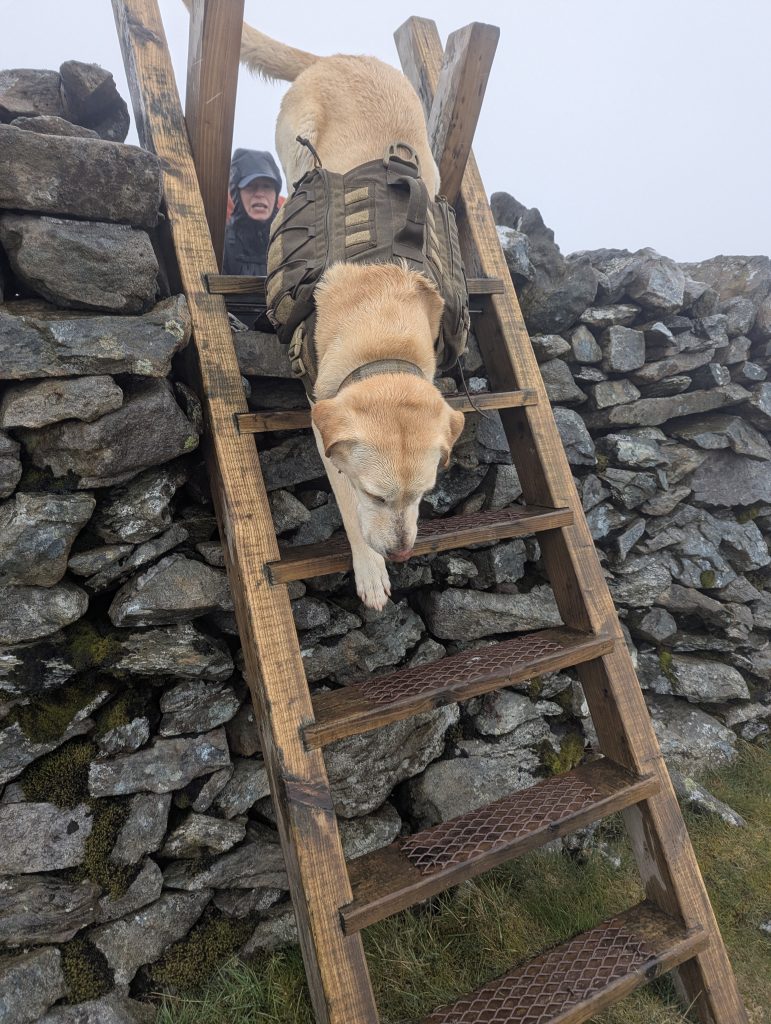 Poppy negotiating A stile like a pro
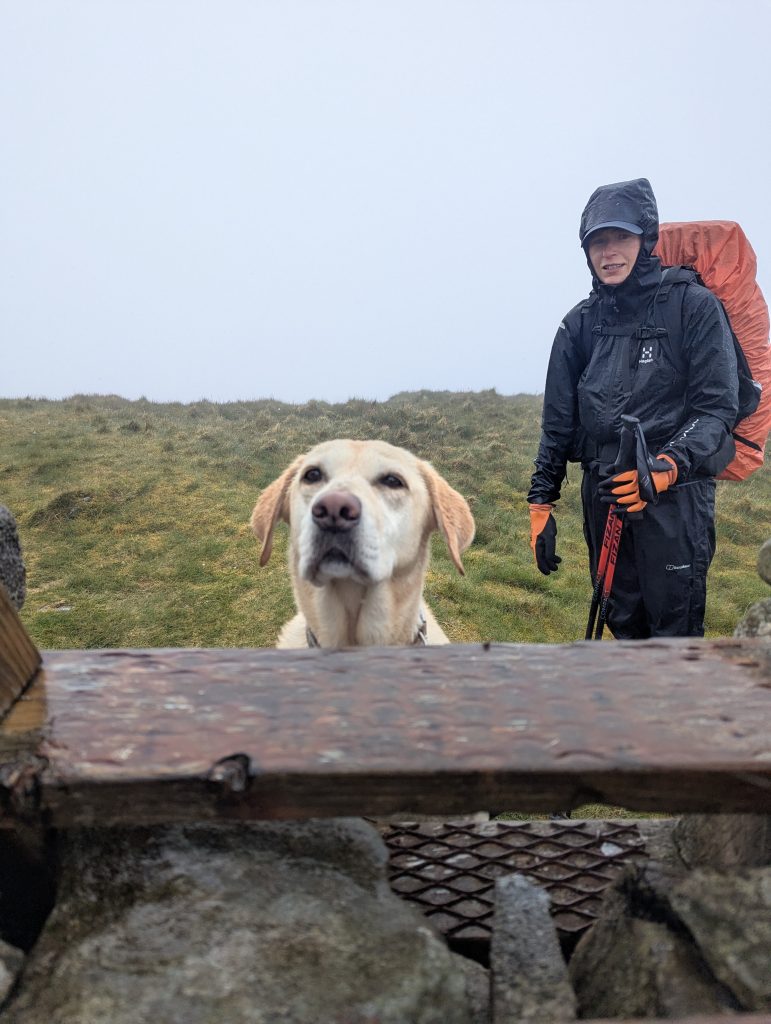 Always curious!
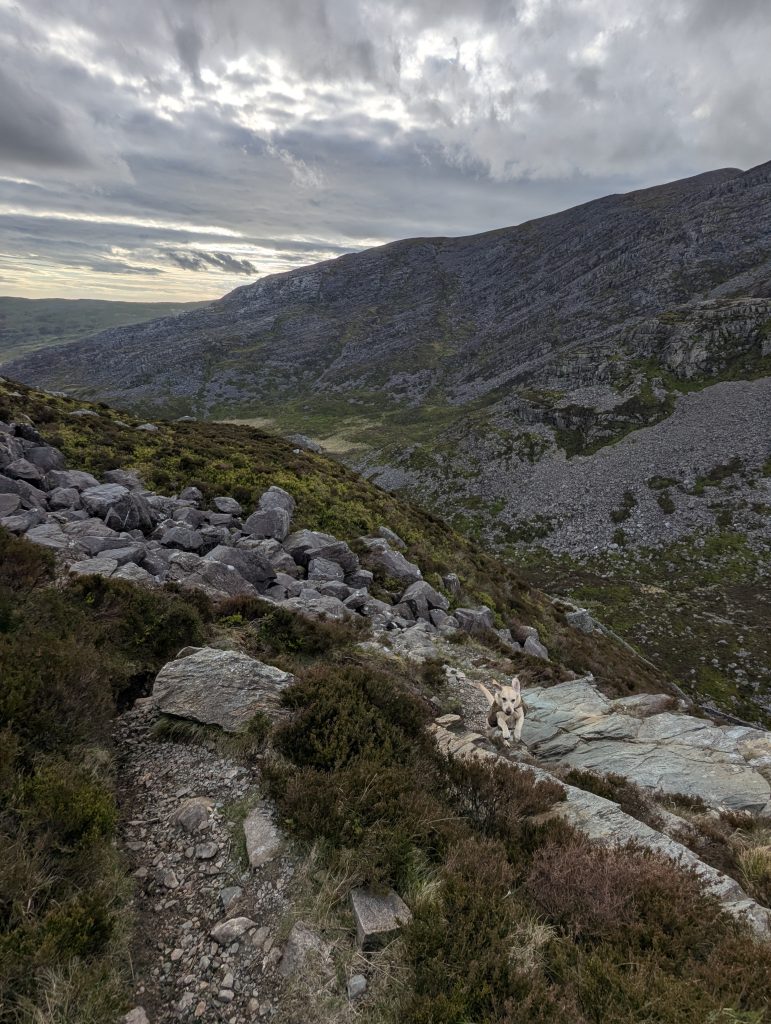 Running up one of Rhinogs
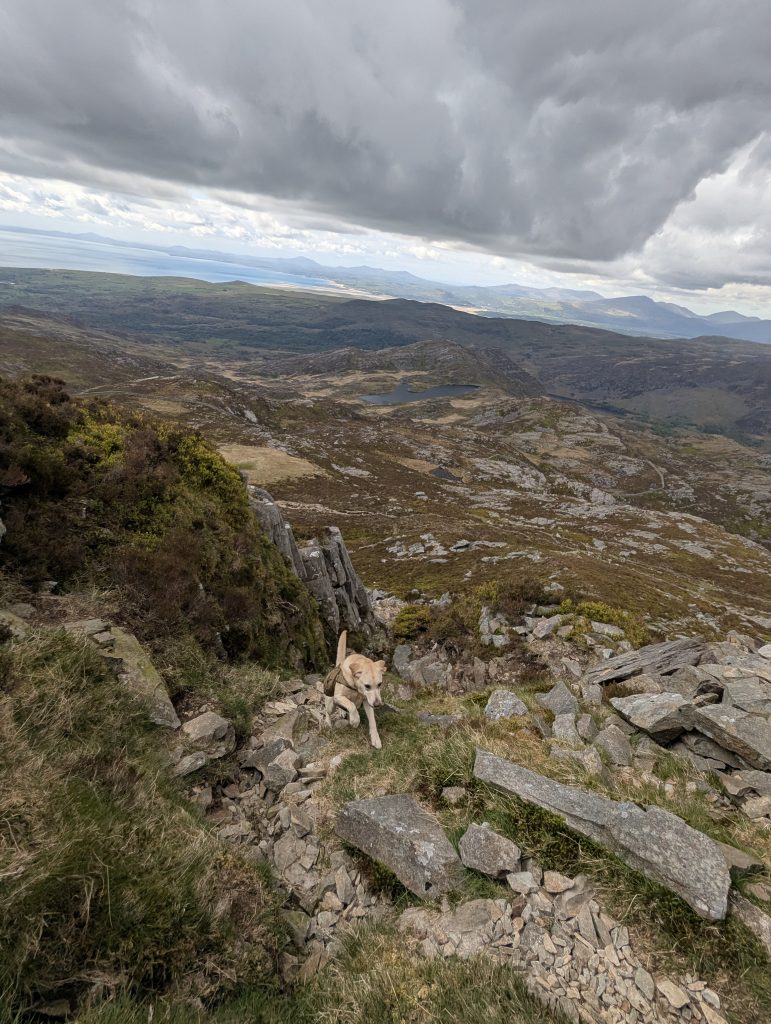 Strong paws are essential for rugged terrain explores
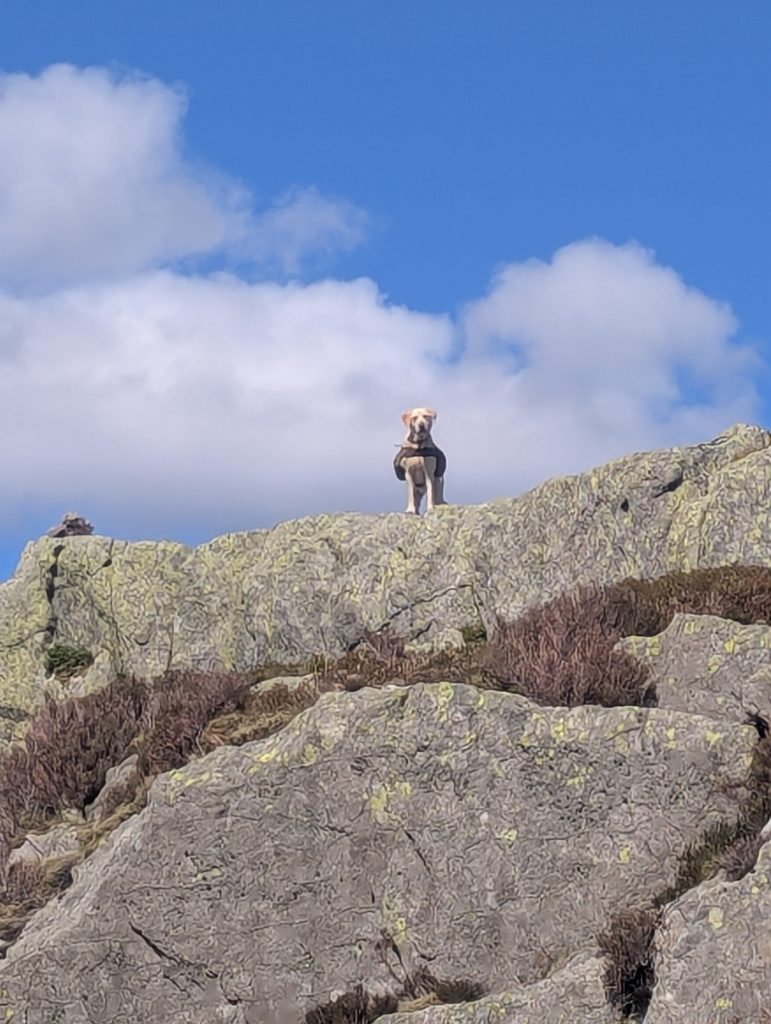 Always first at the top!
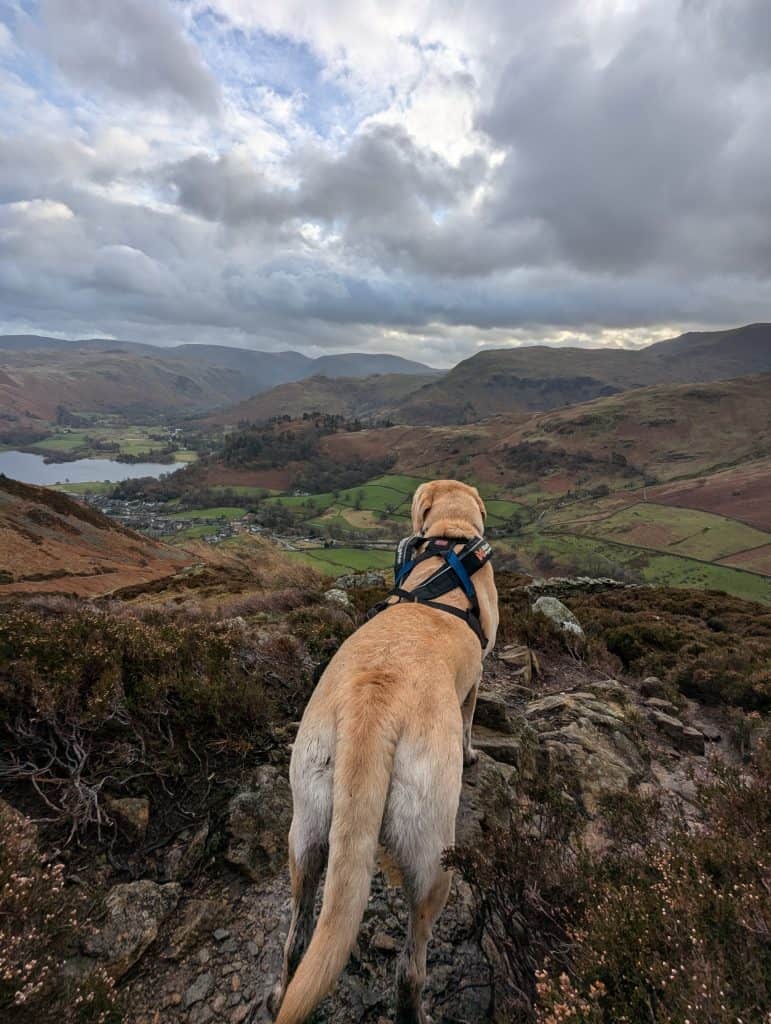
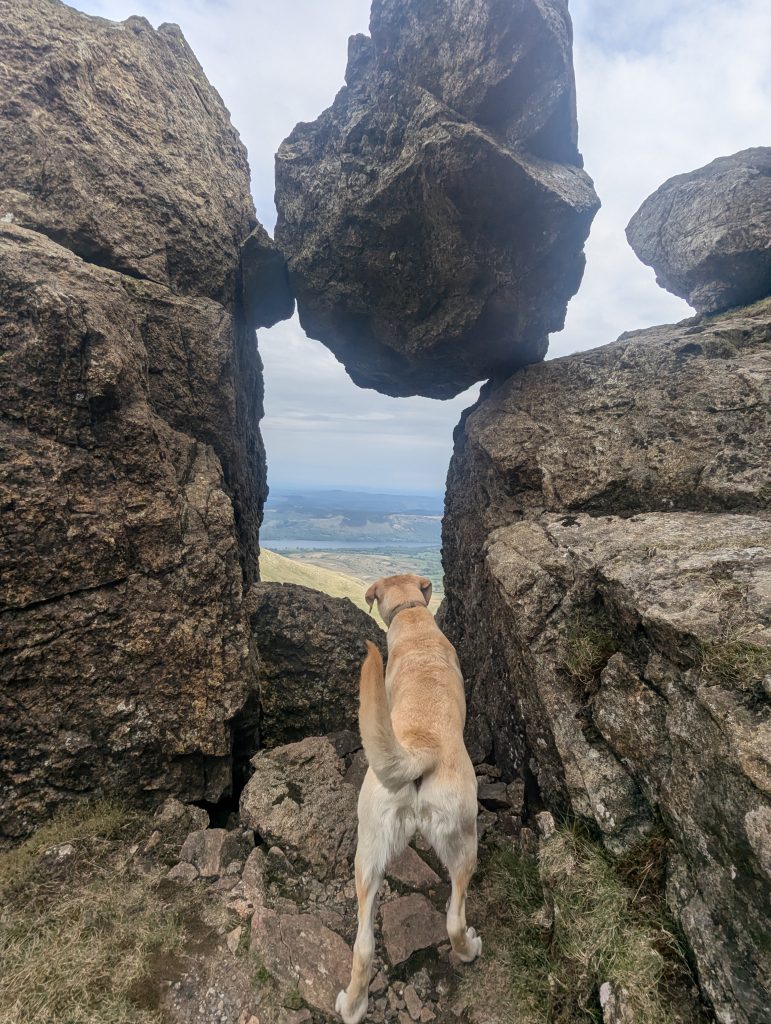 And she loves a good view
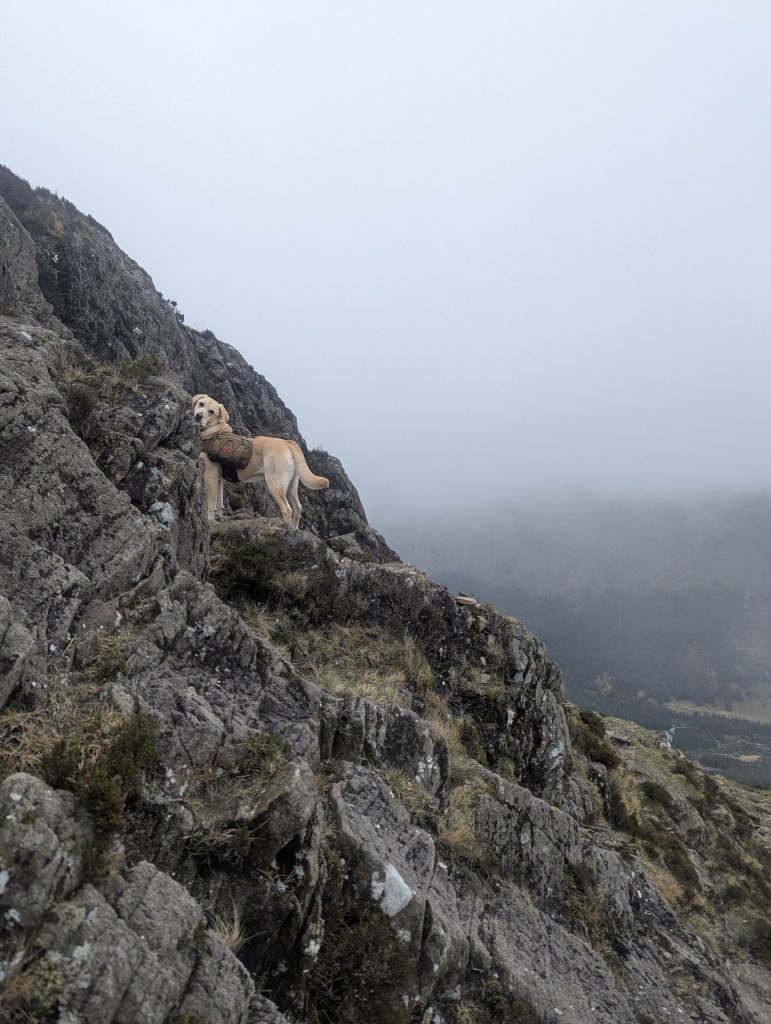 If doggy eyes could say “c’mon, hurry up!”
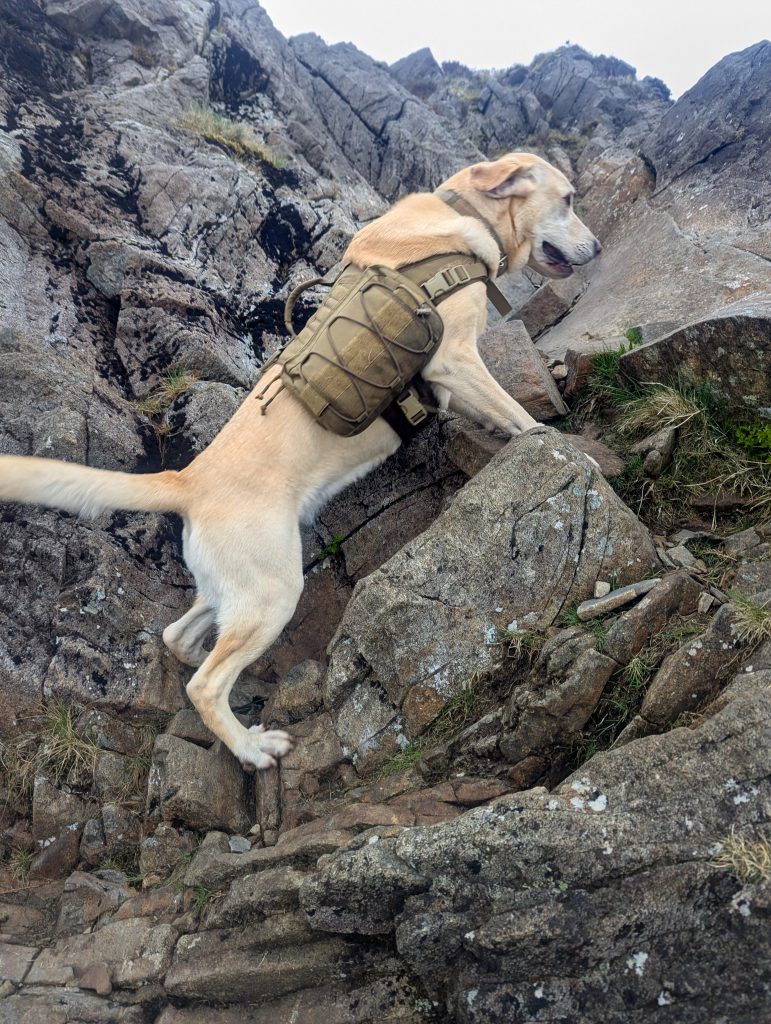 Even though she hates it, she is very agile with her dog pack too!
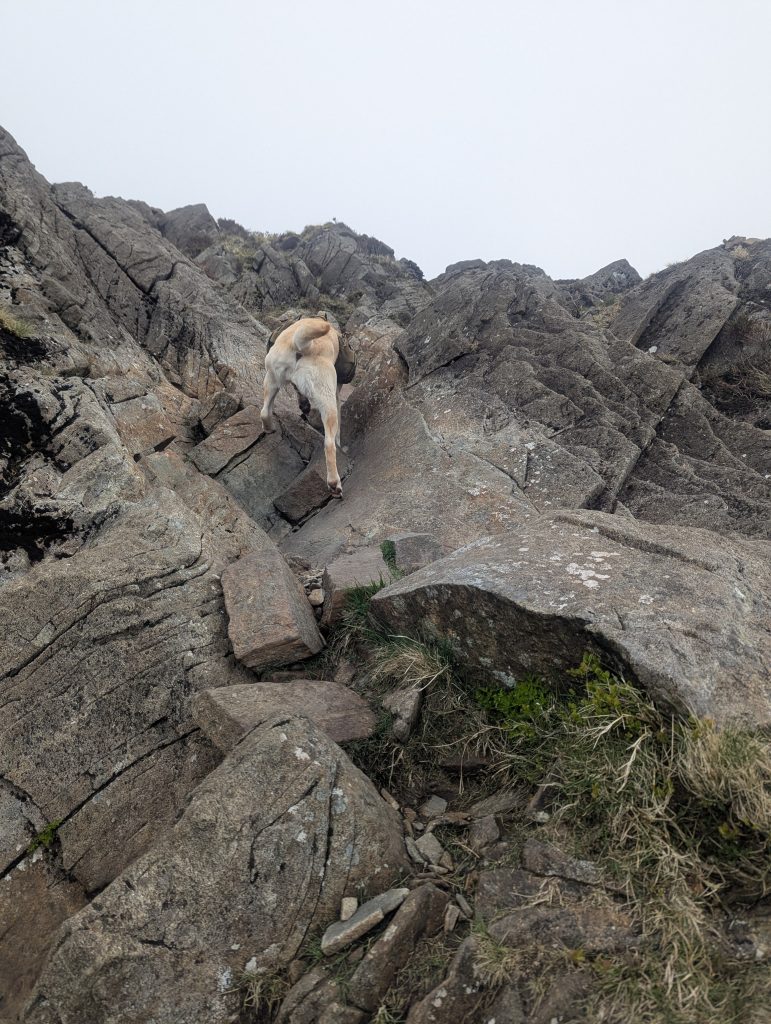 And she looks so cute when she scrambles
Learning to Pause
One of the most important skills we learned wasn’t about moving forward at all. It was about stopping properly. At first, breaks were a bit restless. I’d stop to check the map or grab a drink, and Poppy would stay half-switched on. She would stand rather than settle, ready to move the second I did. Physically, she paused, but mentally she was still working.
So we taught the pause. We’d stop and sit together. Take a moment. Let the breath slow. I’d offer water and wait rather than rushing her to drink. Sometimes we just stood quietly, watching the hills or listening to the wind move through the grass, letting the body settle rather than pushing on out of habit. Over time, she learned that stopping wasn’t the end of the adventure; it was part of it.
On longer days, that lesson became invaluable. Poppy learned how to truly rest by dropping her weight, relaxing through her shoulders, and switching off just enough to recover. A few minutes later, she’d stand, stretch, tail wagging, and be ready to carry on as if nothing had happened. Those pauses weren’t just physical recovery; they were mental, too. They gave space to take things in, to reset after tricky sections, and to approach the next stretch calmly rather than charged with constant motion.
Now, breaks feel efficient and unforced. We stop because it’s time to stop, not because we’re exhausted. And when we move again, we move well. Learning to pause properly turned long days from something to endure into something to enjoy: steady, sustainable, and shared from start to finish.
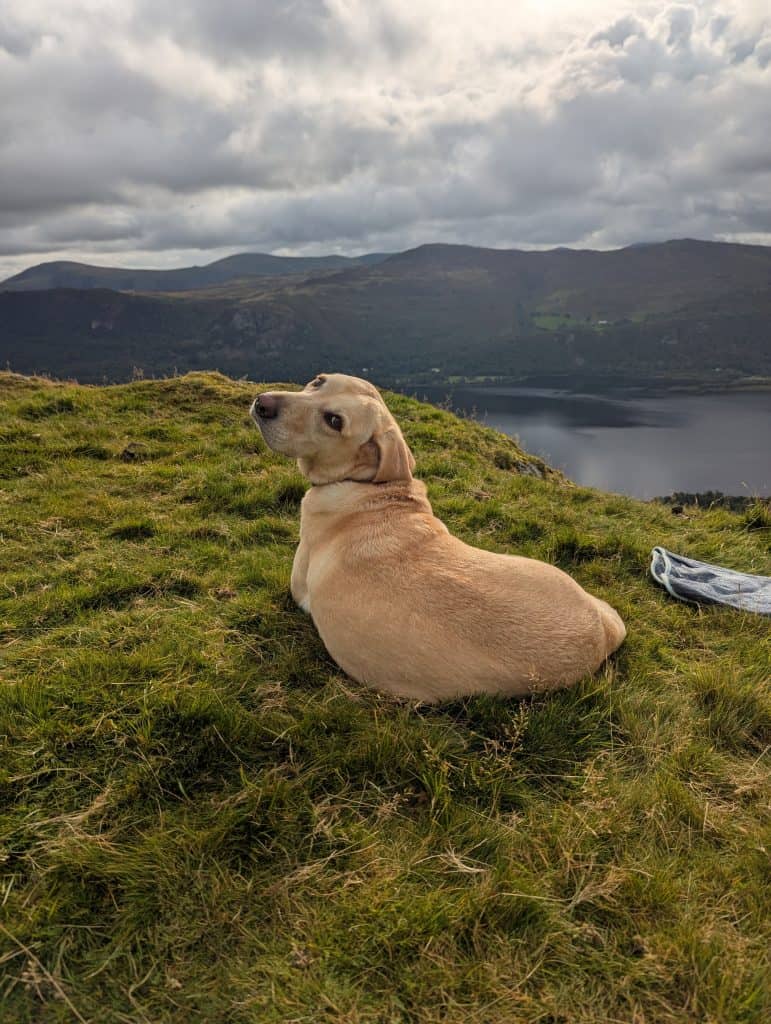 Learning to switch off mentally during a pause turned grueling treks into shared adventures.
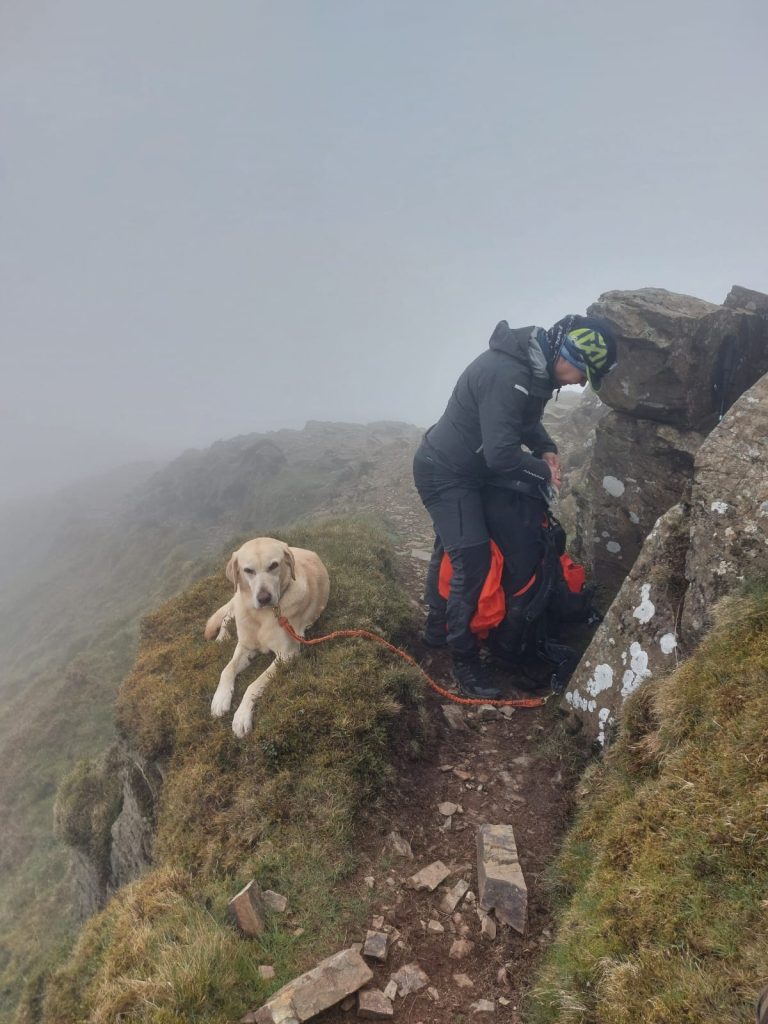 Everywhere is bed if you are brave enough [Photo: A.Scibor]
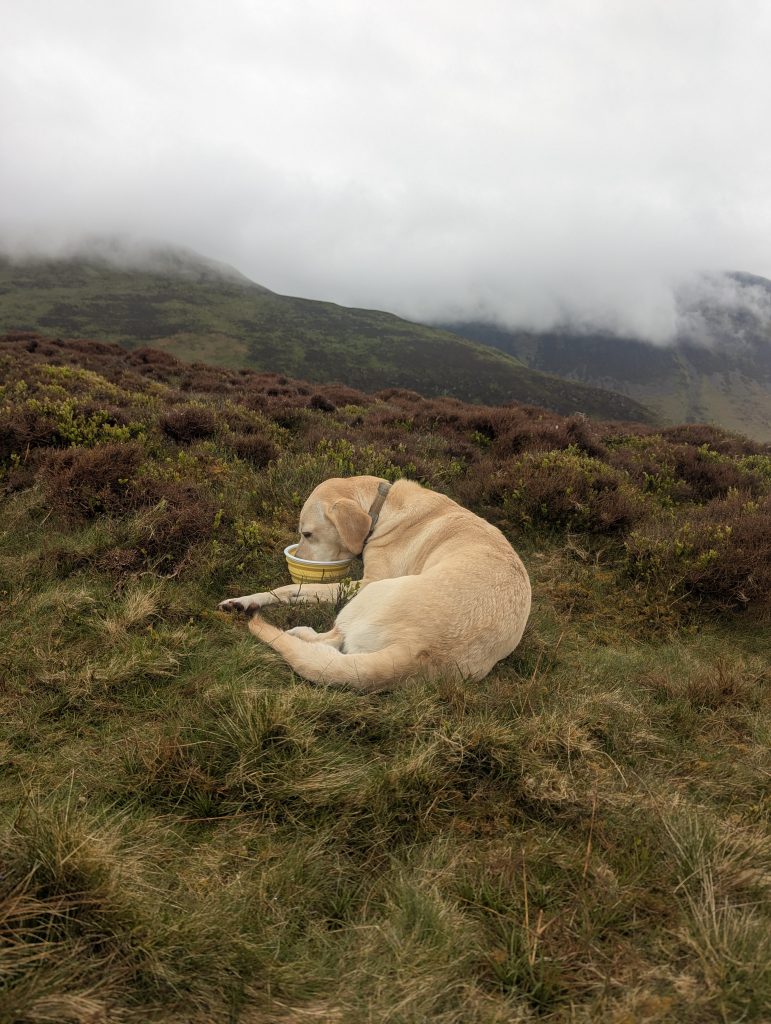 Two birds with one stone – hydration and resting paws
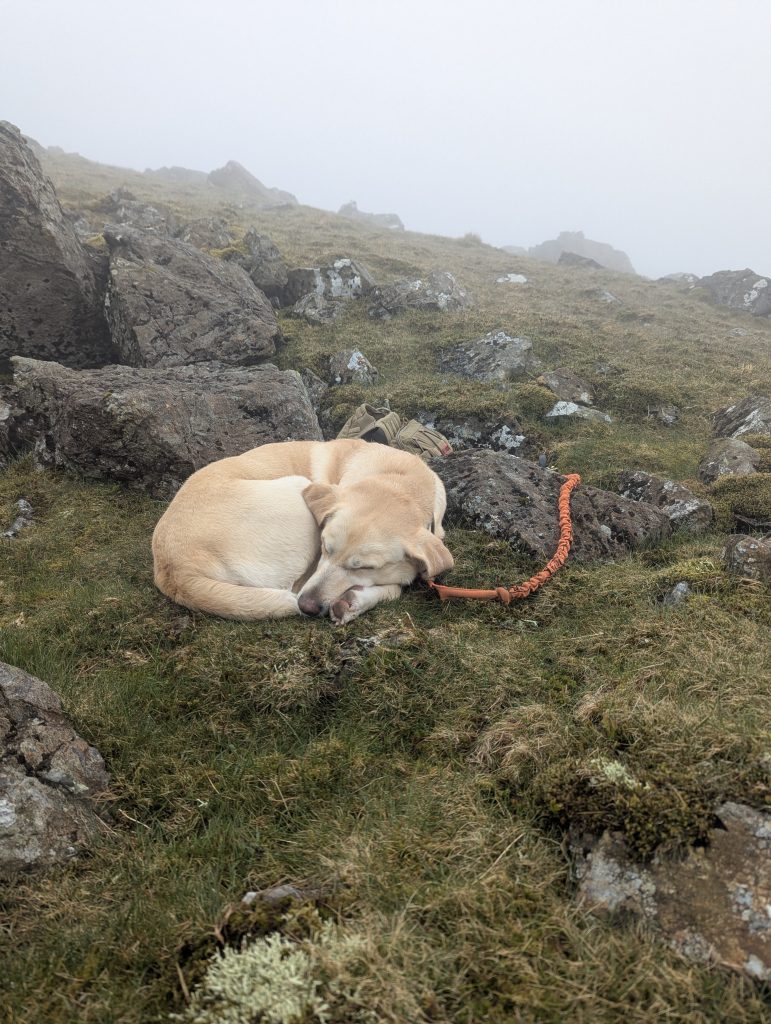 Little snooze while humans faf with lunch
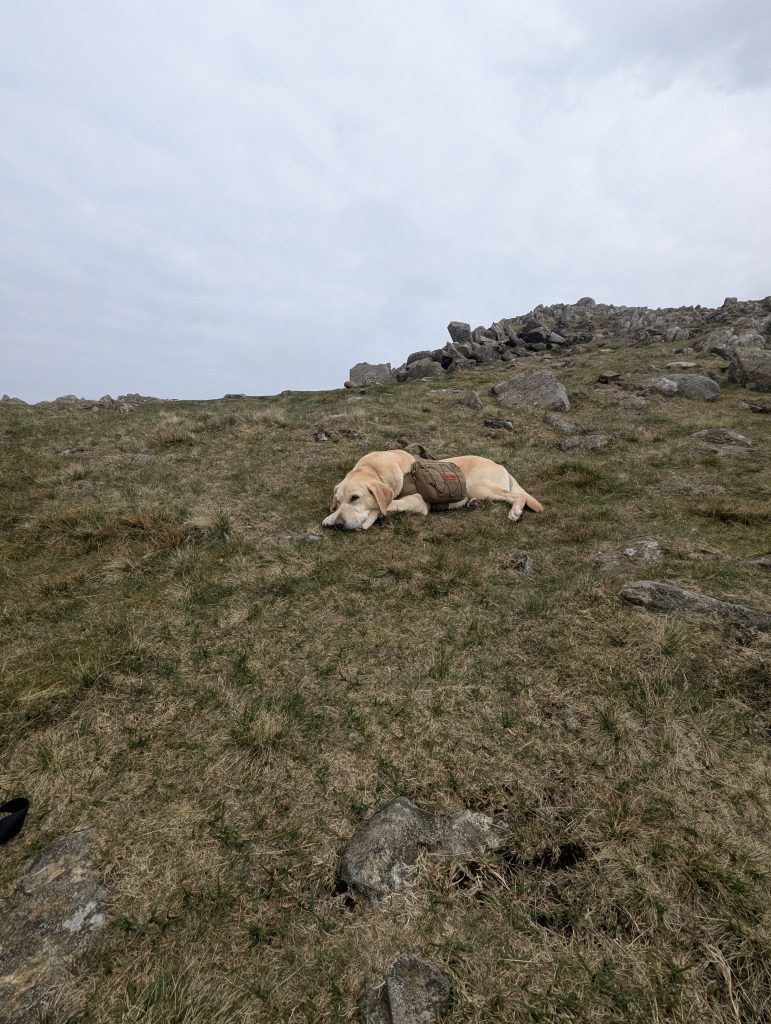 Power nap master
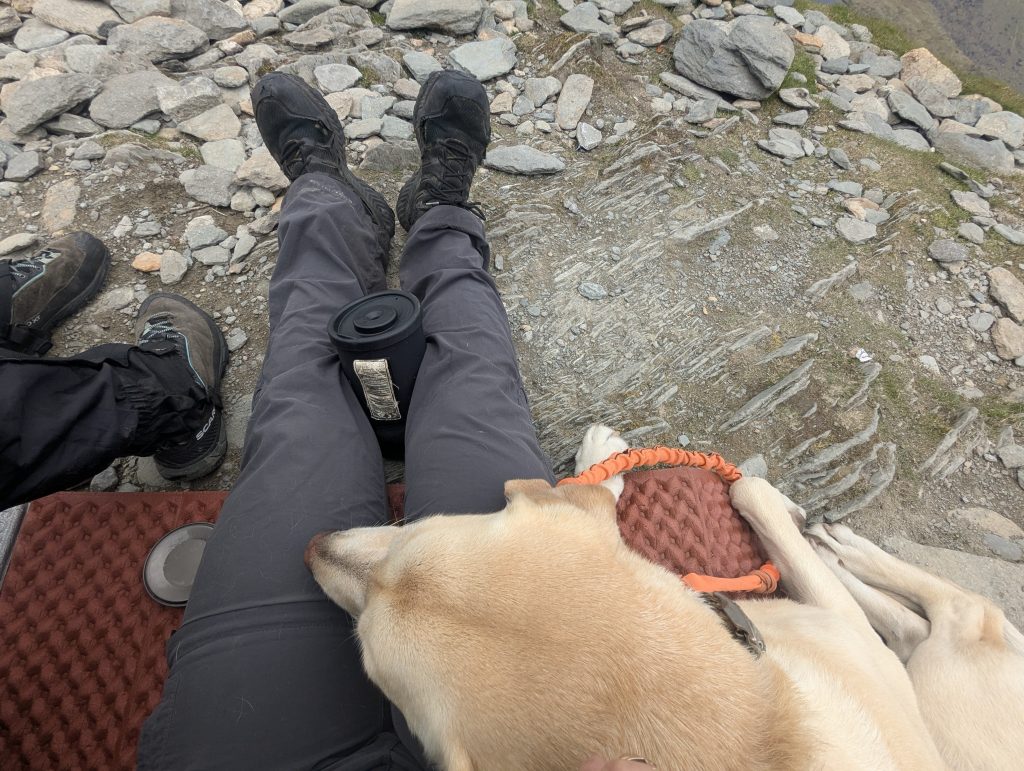 Tea break for me, power nap for Poppy
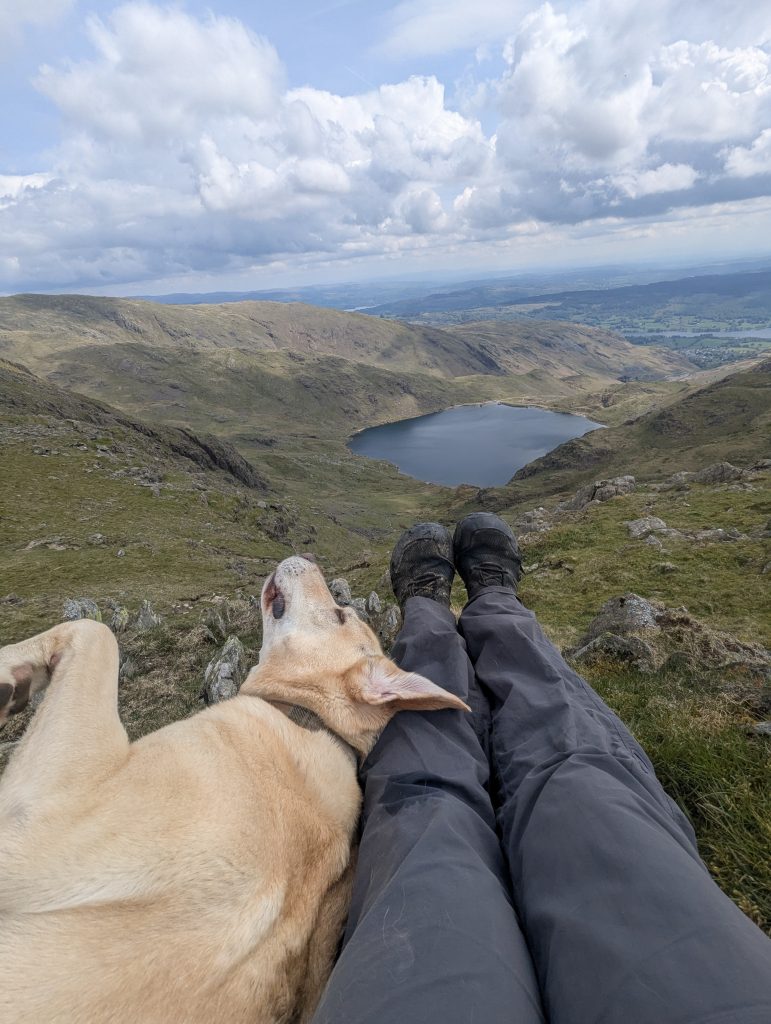 Love when she stretches herself alongside my legs
Getting Comfortable With Gear
This is one area where I had to accept that Poppy has very definite feelings, and they haven’t really changed over time. To this day, she doesn’t like wearing anything on her back. Even a harness can be met with suspicion, but the long canicross harness and her backpack harness are, in her view, particularly offensive. When I put them on, she’ll often refuse to move altogether and plant herself firmly on the spot. Alternatively, she’ll set off in a slightly sideways, exaggerated walk that clearly says, “I am deeply unhappy about this.” It’s strangely impressive how expressive a dog can be without making a sound.
The key, I learned, wasn’t forcing the issue but calmly coaxing her into starting. A few gentle words, a familiar cue, and a bit of patience go a long way. And almost without fail, once we’d been moving for a few minutes, the drama faded. The moment the world started happening with all the smells, terrain, and forward momentum, she forgot all about the ordeal. Her movement smoothed out, her tail came up, and it was business as usual.
Because of that, we’ve always introduced the kit on short, familiar walks. This is not to teach her to love it, as that was never realistic. It is to make sure it didn’t interfere with her movement or cause genuine discomfort once she settled. Those outings were invaluable for checking fit, spotting pressure points, and making sure nothing rubbed once she was actually moving properly. She may never enjoy wearing gear, and that’s okay. What matters is that after those first few moments, it disappears into the background of the walk. By the time we’re well into a longer day, she’s confident, relaxed, and moving freely, which tells me everything I need to know.
More Than Just Miles
An all-day walk isn’t just a physical effort; it’s a lot to take in. Over the course of a long day, your dog absorbs far more than distance alone. New places with unfamiliar smells. Other dogs and people passing close by. Livestock quietly watch from behind a wall. Open ridges with strong wind, sudden rain showers, patches of warm sun, and sometimes all of this within the space of a few hours. For Poppy, learning to handle that variety was just as important as building fitness. Early on, new environments clearly took more out of her than walking itself. She’d be alert, switched on, and processing everything around her.
Gradual exposure made a huge difference. Visiting different places regularly, even for shorter outings, helped normalise it all. Sheep became background noise. Busy paths stopped feeling like an event. Sudden weather changes were taken in stride. Of course, some things probably won’t ever change. Squirrels and hares still trigger instant enthusiasm, no matter how experienced or tired she is. It is a brilliant reminder that instinct always has the final say. But overall, confidence replaced caution.
By the time we were spending full days out, longer outings felt exciting rather than overwhelming. This wasn’t because the world got smaller, but because she understood it better. She wasn’t just physically capable of being there; she was comfortable there. She was able to move, rest, and enjoy the day without carrying constant tension. And that, more than miles or elevation, is what makes an all-day adventure truly sustainable.
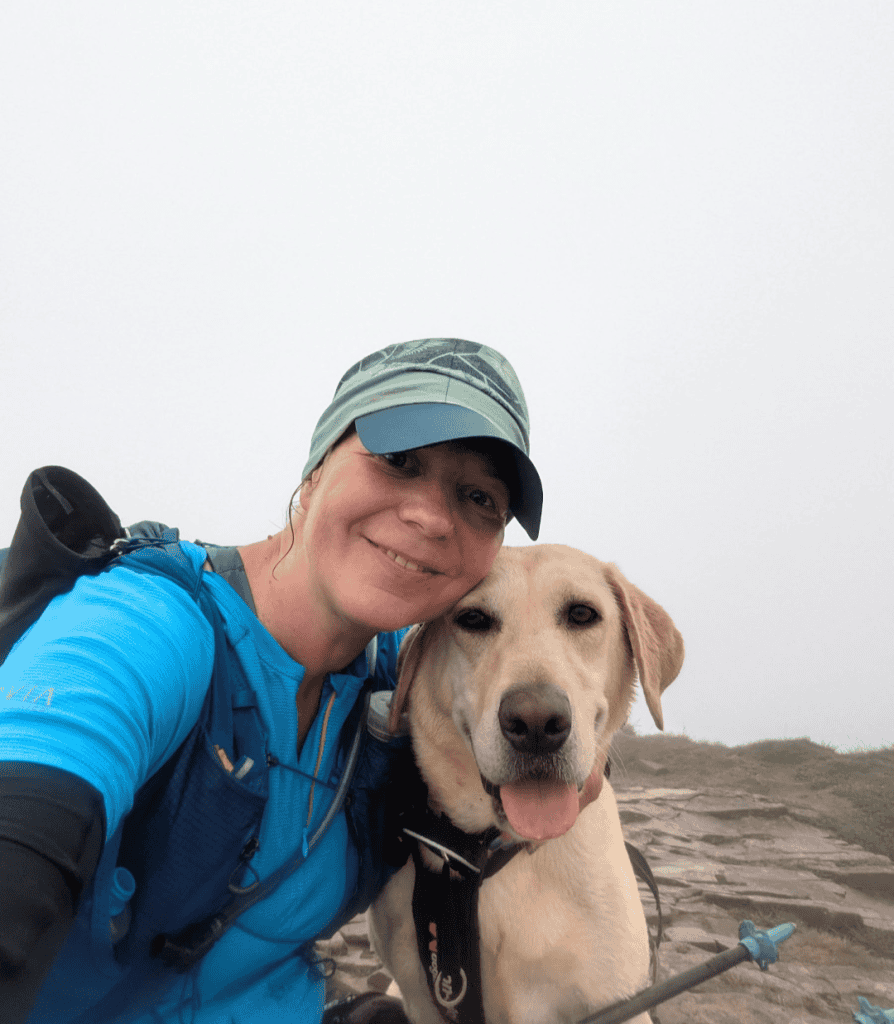 Steady canicross consistency laid the perfect launchpad for our full-scale trekking trips.
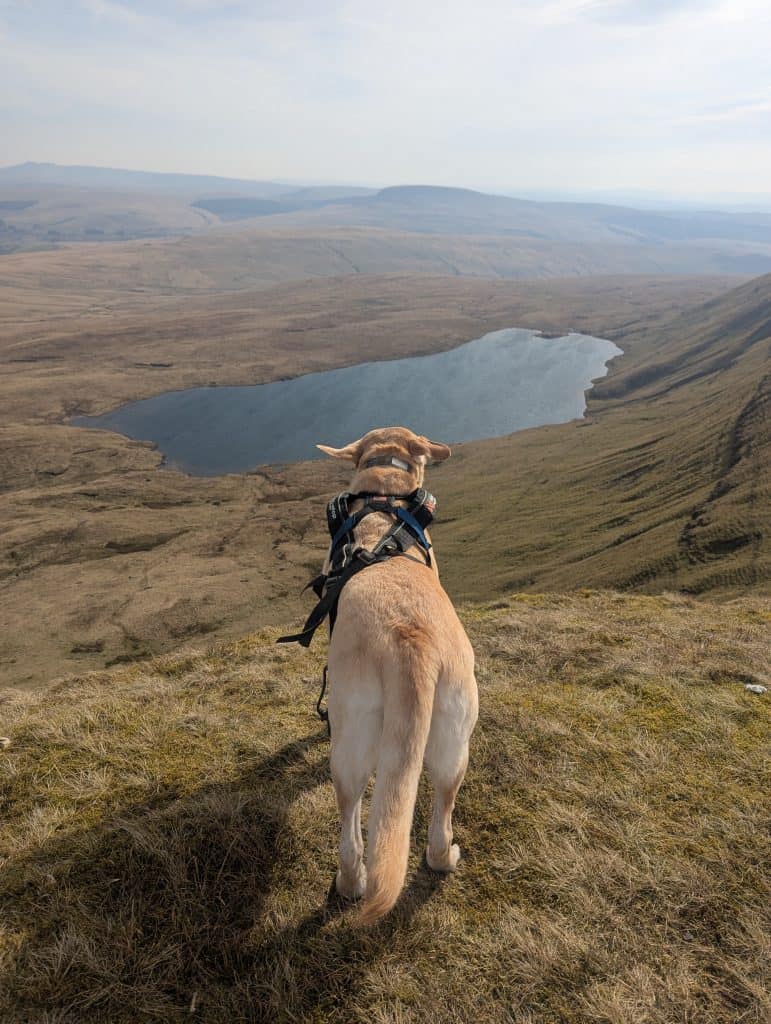 Reaching the high cols reveals sweeping lake views that make every technical, boggy climb entirely worth the effort.
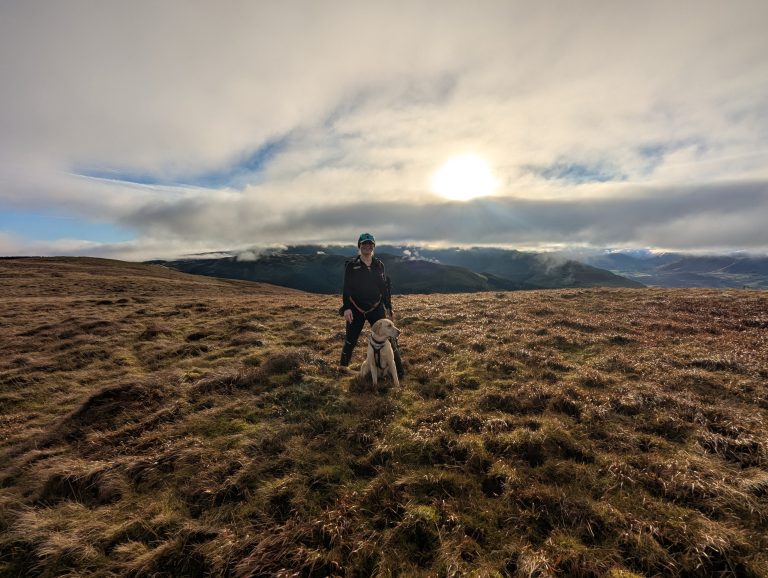
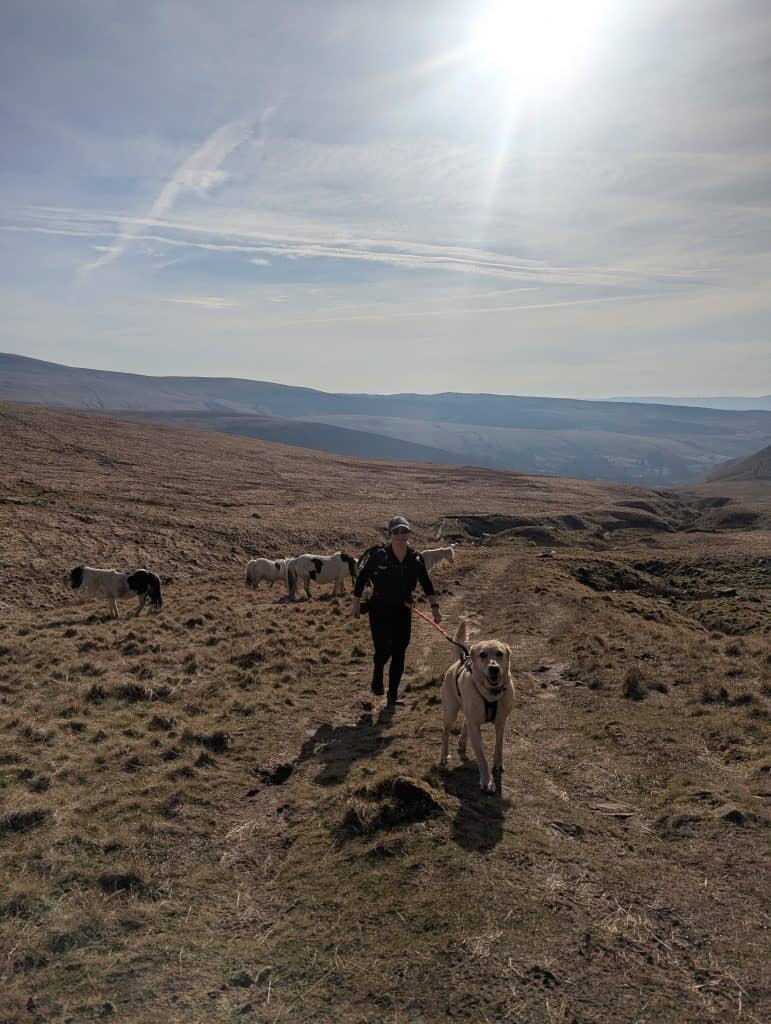 Long days out absorb far more than miles; getting used to ridge winds, rain, and livestock is half the battle [Photo: K.Fraser]
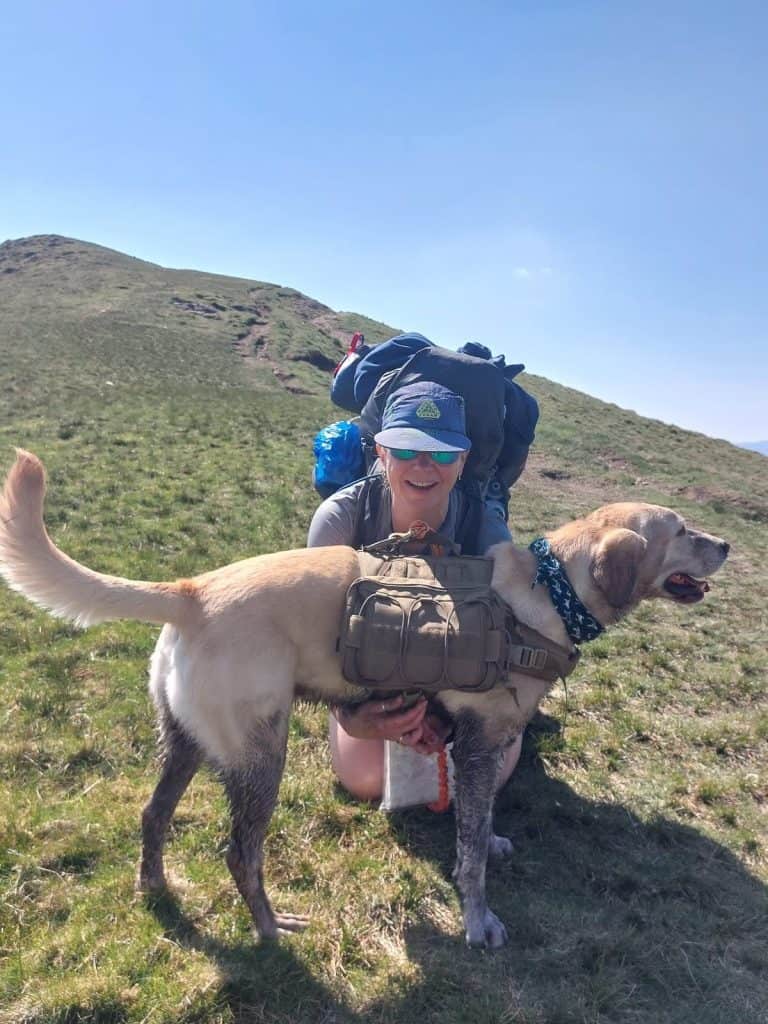 She may look highly unamused when the harness goes on, but the first few trail smells instantly break the drama [Photo: A.Scibor]
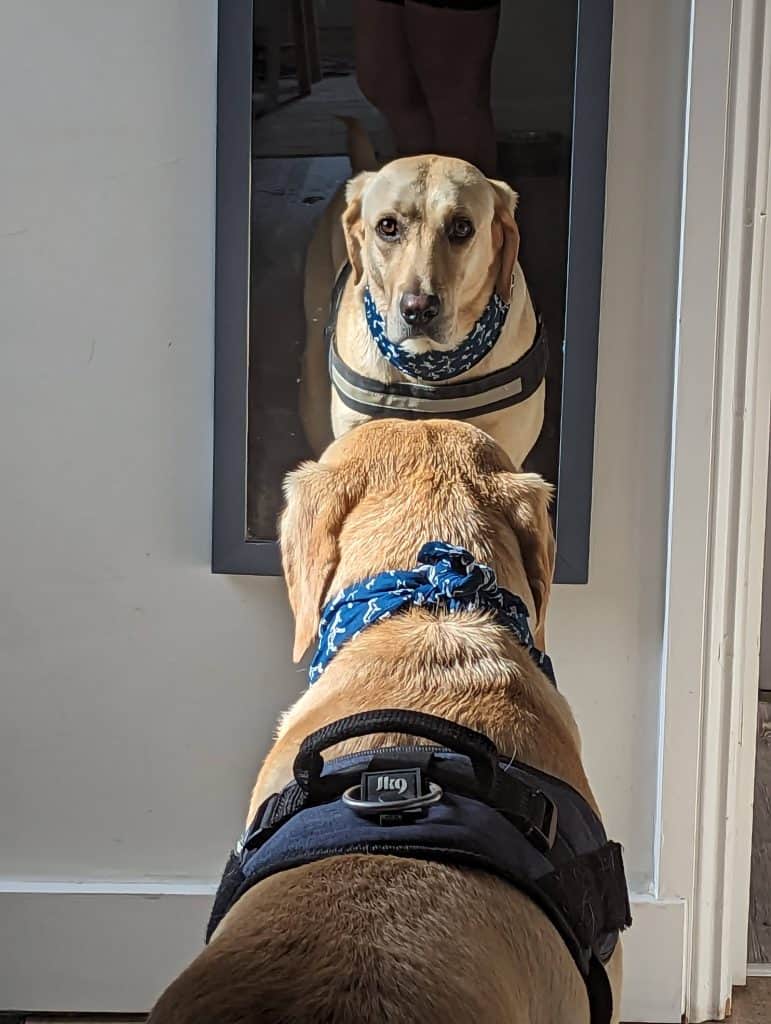 Testing a new trail harness indoors helps keep the first real walk smooth and stress-free.
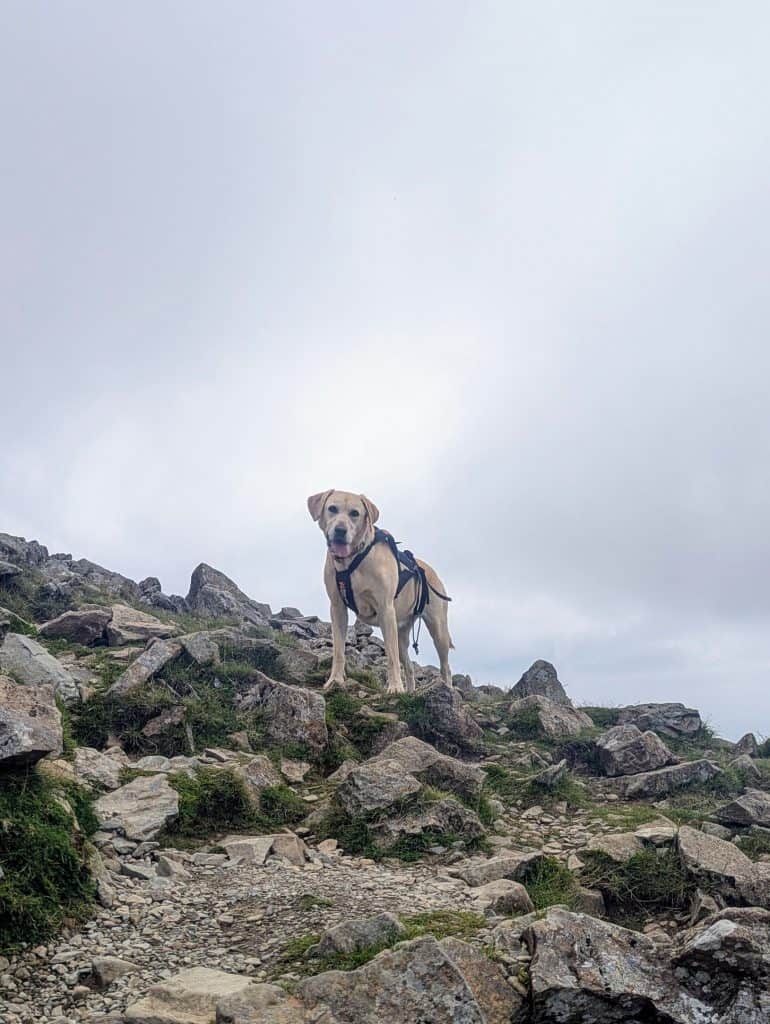 Letting her slow down and solve the puzzle of a rocky scramble built massive trail confidence.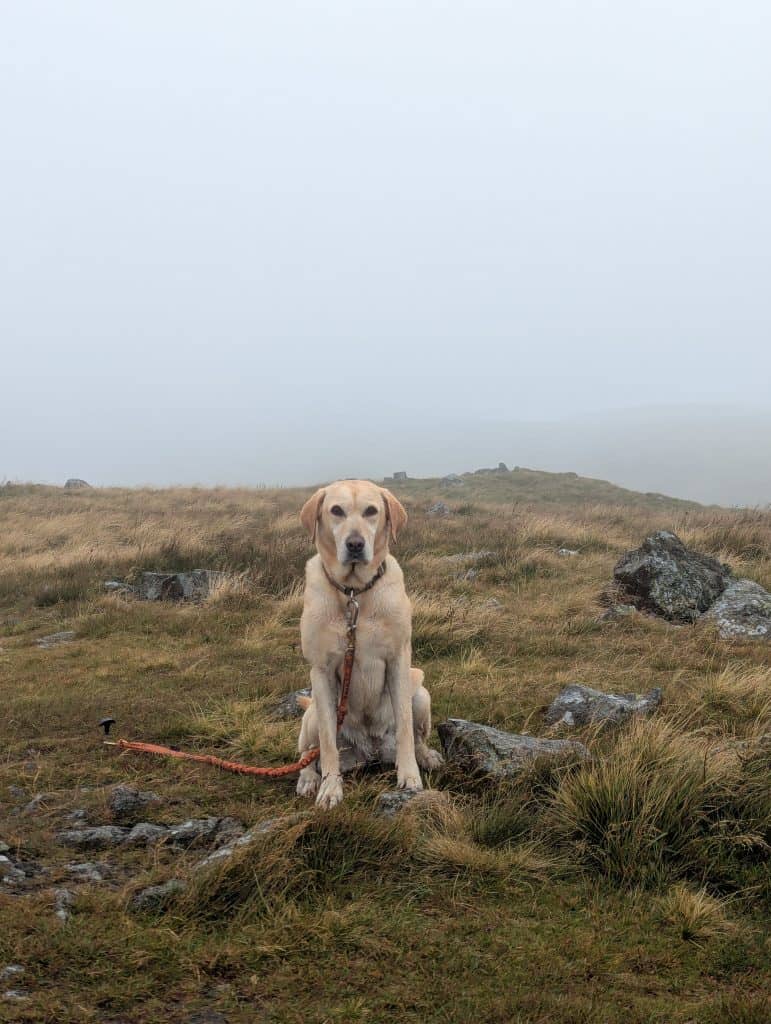
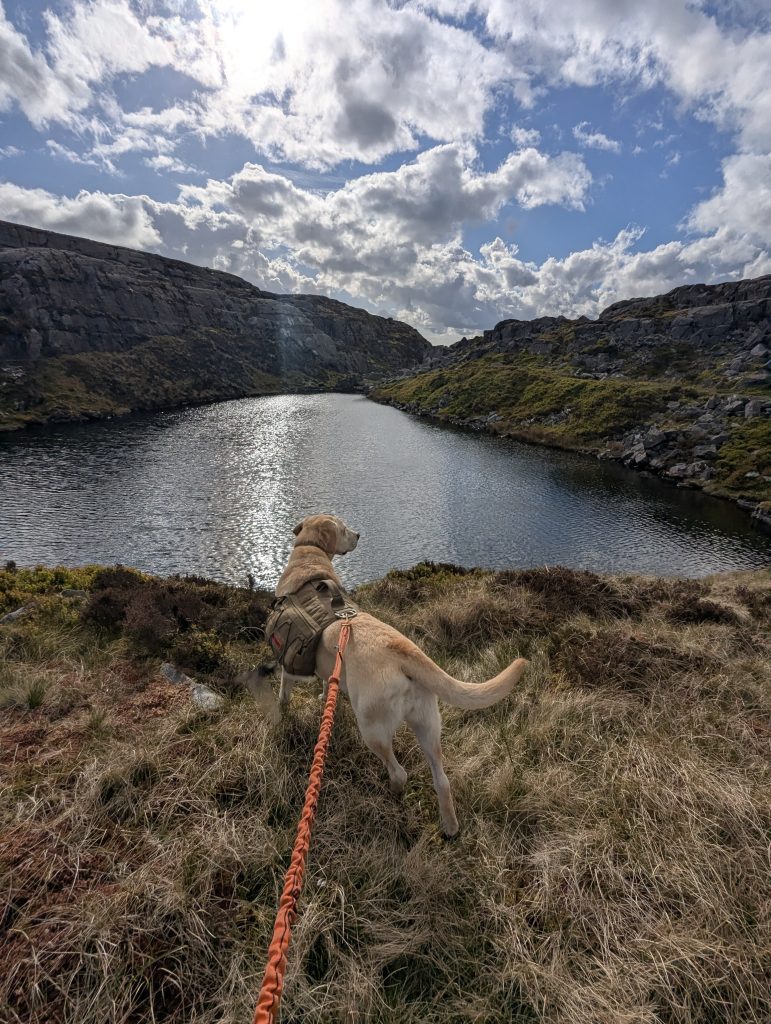 Taking a moment to scope out the line around the water’s edge before moving back into the crags.
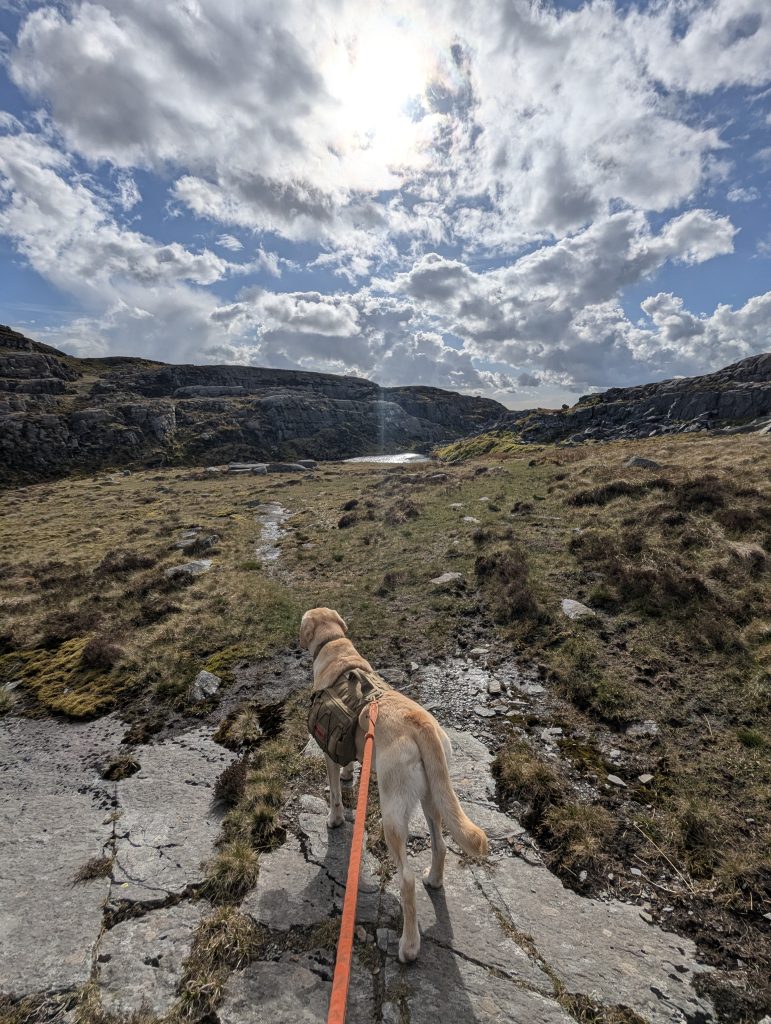 Trusting the four-legged navigator to find the natural steps through the fractured gritstone passes.
How It All Came Together
Looking back, everything really started with canicross.
Before all-day hikes were even on the radar, we were building fitness through regular runs. Short outings at first, then gradually increasing mileage, learning how to move together, finding a rhythm, and stacking consistency week by week. Distances grew steadily, eventually stretching to half-marathon distances and beyond. That phase did a lot of quiet work in the background. It built cardiovascular fitness, strength, and mental focus, without long hours on tired feet. It also forced us to sort the basics early. We learned how gear sat once we were moving properly, how Poppy coped wearing something on her back (begrudgingly), and how small adjustments could make a big difference over time.
As mileage increased, everything else started to slot into place. Longer runs made shorter hikes feel easier. Recovery improved. Paws adapted gradually as we mixed in different surfaces. We learned when to push on and when a rest day (or softer ground) was the smarter option. From there, full-day hikes didn’t arrive as a sudden goal. They simply appeared as a natural extension of the fitness we’d already built. Half-day outings crept in first, with proper pauses, water stops, and time to settle, utilising the same skills we’d learned during canicross recovery moments.
I’m also very aware that I’m fortunate. Poppy is a working breed, built for endurance, and she genuinely enjoys being out and about. Long days suit her temperament as much as her body. She’s learned how to rest when she needs to, switch off during pauses, and then get back up ready to see what’s next. New terrain, new routes, awkward scrambles, she’s always willing to give things a go.
Canicross absolutely helped us reach this level of fitness. It gave us consistency, structure, and a strong endurance base. But I’m confident that regular, gradual hiking would have got us there, too. In the end, it wasn’t about chasing distance or building the “perfect” adventure dog. It was about finding what worked for us, letting fitness grow naturally, and making sure the days stayed enjoyable. Everything else followed from that.